IntermediatePeacefulReef Safe
Stocky Anthias
Pseudanthias hypselosoma
Family: Serranidae · Anthias
Also known as: Stocky Fairy Bass, Deepbody Anthias
(c) uwkwaj, some rights reserved (CC BY-NC)
Max Size
5"
Min Tank
70 gal
Lifespan
5-8 years
Origin
Western Pacific, Australia
Diet
Planktivore
Swims
Middle
About
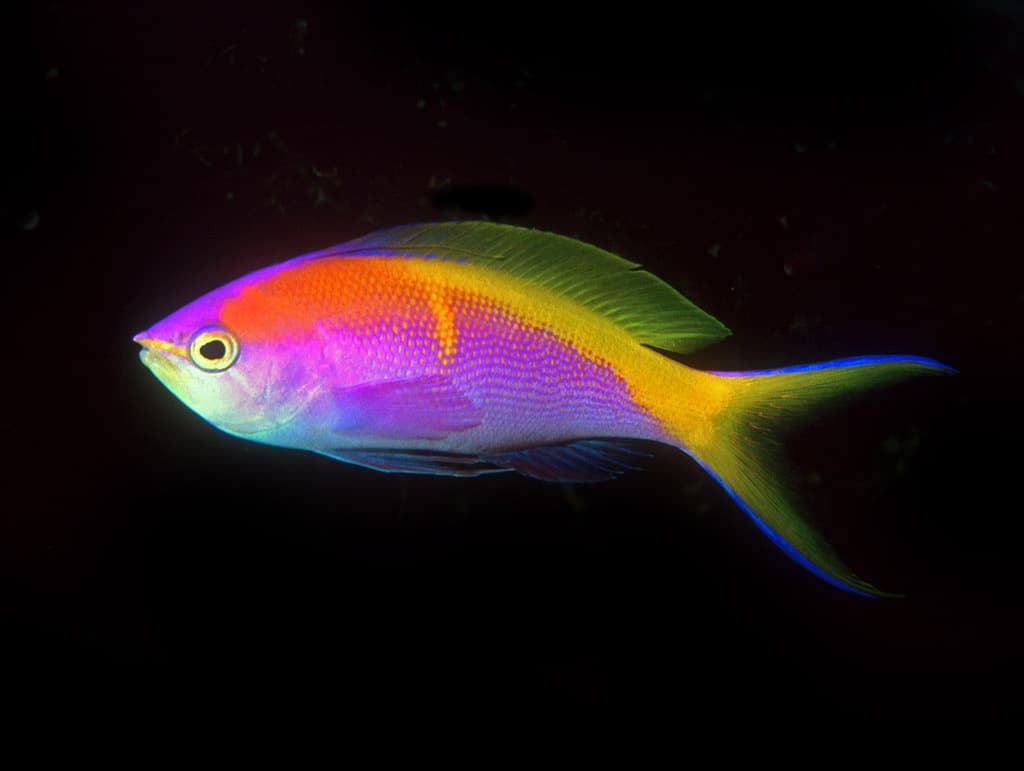
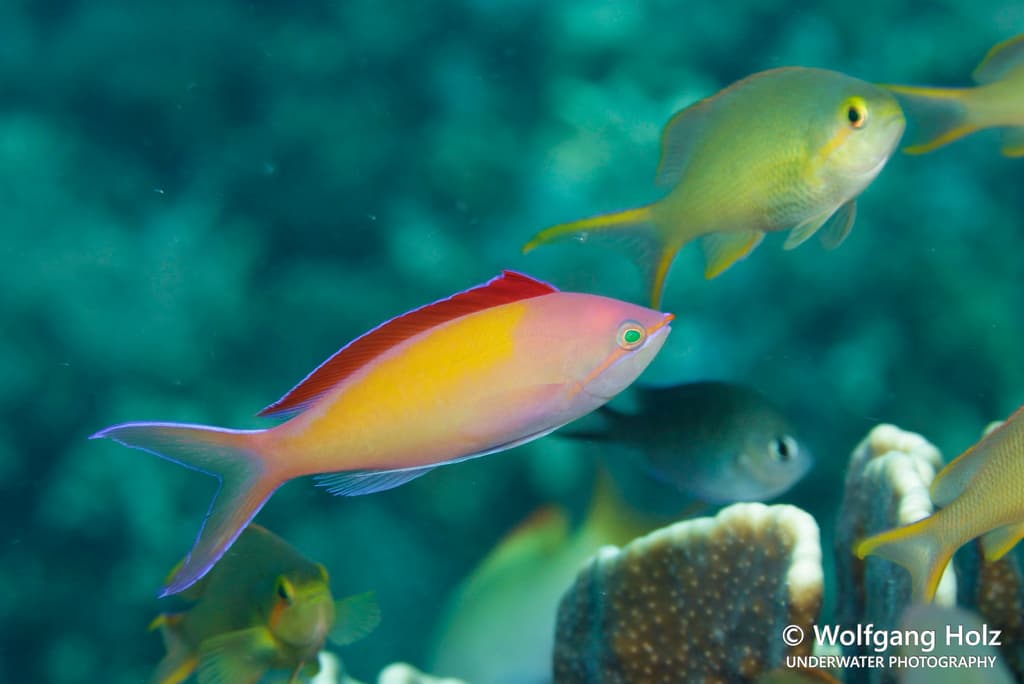
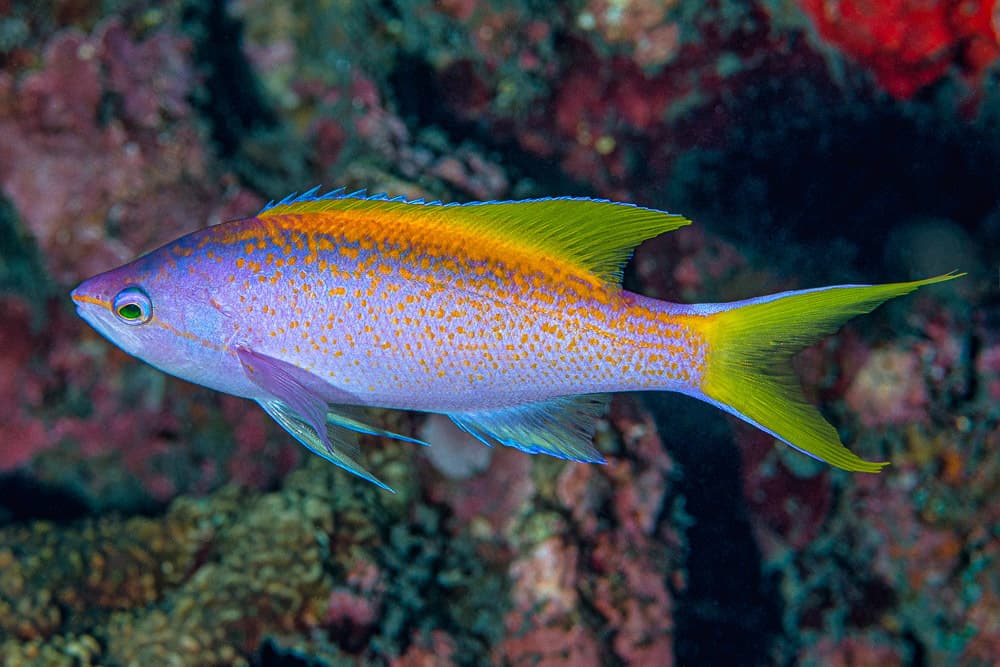
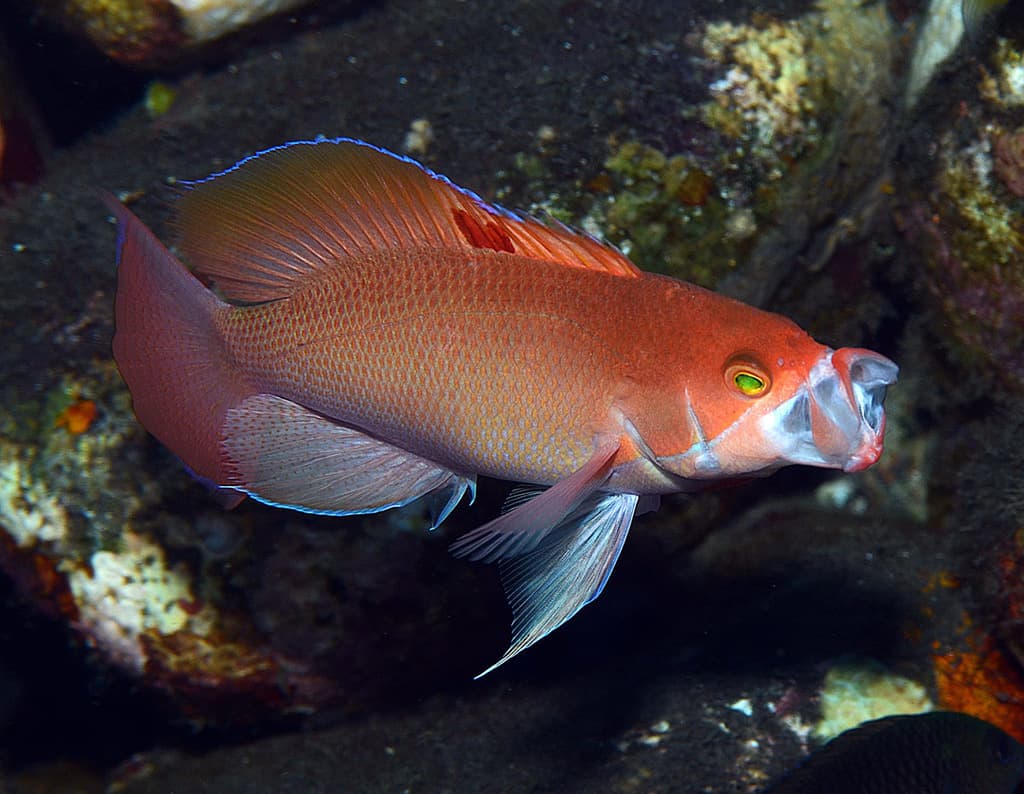
The Stocky Anthias is aptly named for its robust, deeper body shape compared to the more slender profile typical of most anthias species. Males display a beautiful pink-orange body with subtle purple highlights and a distinctively deep, rounded body profile. Females are more uniformly orange-pink. This species is found throughout the western Pacific, particularly common in Australian and Japanese waters, where it inhabits outer reef slopes at moderate depths.
In the aquarium, the Stocky Anthias is moderately difficult to maintain, aligning with the standard care demands of the anthias family. Its slightly hardier constitution compared to deep-water specialist species makes it a reasonable choice for intermediate aquarists who are ready to commit to the frequent feeding schedule and stable water quality that all anthias require. They adapt to prepared foods reasonably well once settled into a new environment.
Maintain Stocky Anthias in haremic groups of one male with three to five females in a tank of at least 70 gallons. Their robust body shape means they need proportionally more swimming space than their length alone would suggest. Moderate to strong water flow and plenty of open water column space are appreciated. Their peaceful demeanor and attractive pink-orange coloration make them a reliable choice for a community reef aquarium.
Feeding & Diet
Planktivore
Stocky Anthias are planktivores that feed on zooplankton in the water column. Offer frozen mysis shrimp, enriched brine shrimp, cyclopeeze, and quality marine pellets. Feed at least three times daily to maintain their robust body condition.
Compatibility
reef-safepeacefulschoolingcommunity-safeplanktivore
Stocky Anthias are peaceful community reef fish. Keep one male per group to prevent aggression. They are compatible with clownfish, tangs, wrasses, gobies, and other non-aggressive reef species.
Check CompatibilityBreeding
Very Difficult
Stocky Anthias are protogynous hermaphrodites. Spawning occurs at dusk in the water column. Captive breeding is extremely challenging due to the tiny pelagic larvae requiring specialized live foods.
Special Requirements
- Requires multiple feedings per day (3+ minimum)
- Best kept in a harem of one male with several females
- Moderate to strong water flow preferred
- Provide ample open swimming space for their deep-bodied build
- Automatic feeder recommended
Water Parameters
Temperature72–78°F
Specific Gravity1.02–1.026 sg
pH8.1–8.4
Alkalinity8–12 dKH
Coloration
pinkorangepurplerose
Tags
reef-safepeacefulschoolingcommunity-safeplanktivore