IntermediatePeacefulReef Safe
Bartlett's Anthias
Pseudanthias bartlettorum
Family: Serranidae · Anthias
Also known as: Bartlett's Fairy Bass
(c) uwkwaj, some rights reserved (CC BY-NC)
Max Size
3.5"
Min Tank
55 gal
Lifespan
5-7 years
Origin
Western Pacific, Palau
Diet
Planktivore
Swims
Top
About
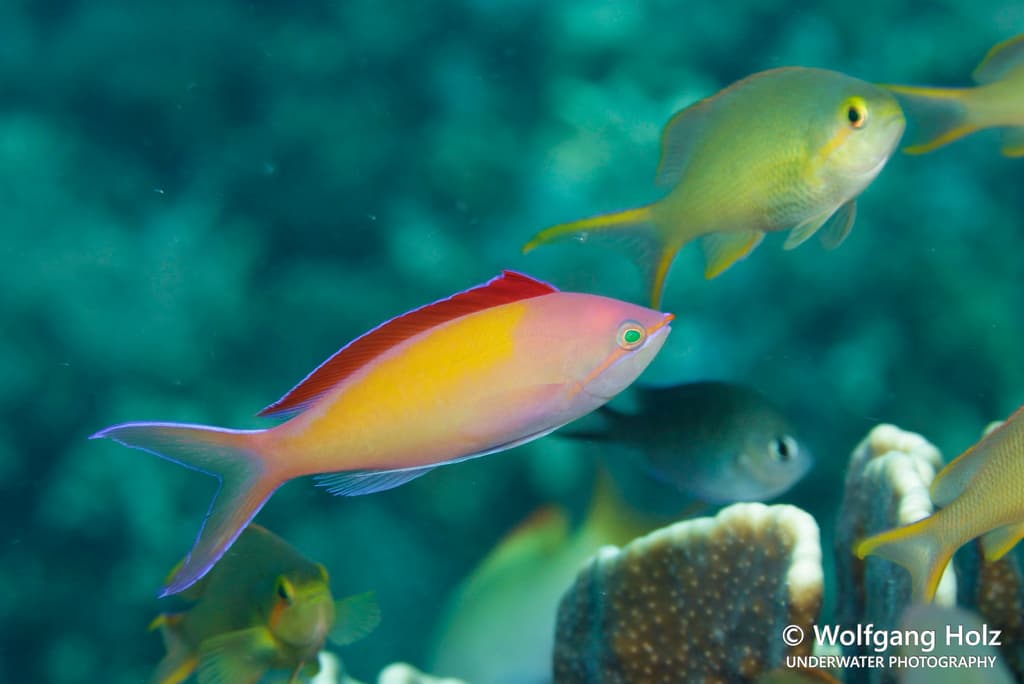
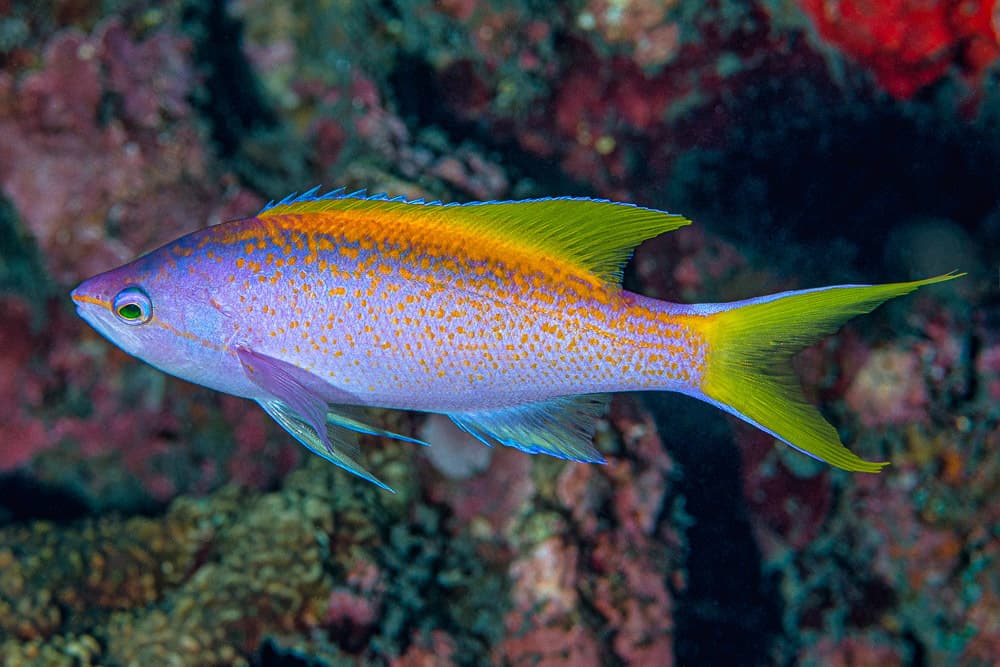
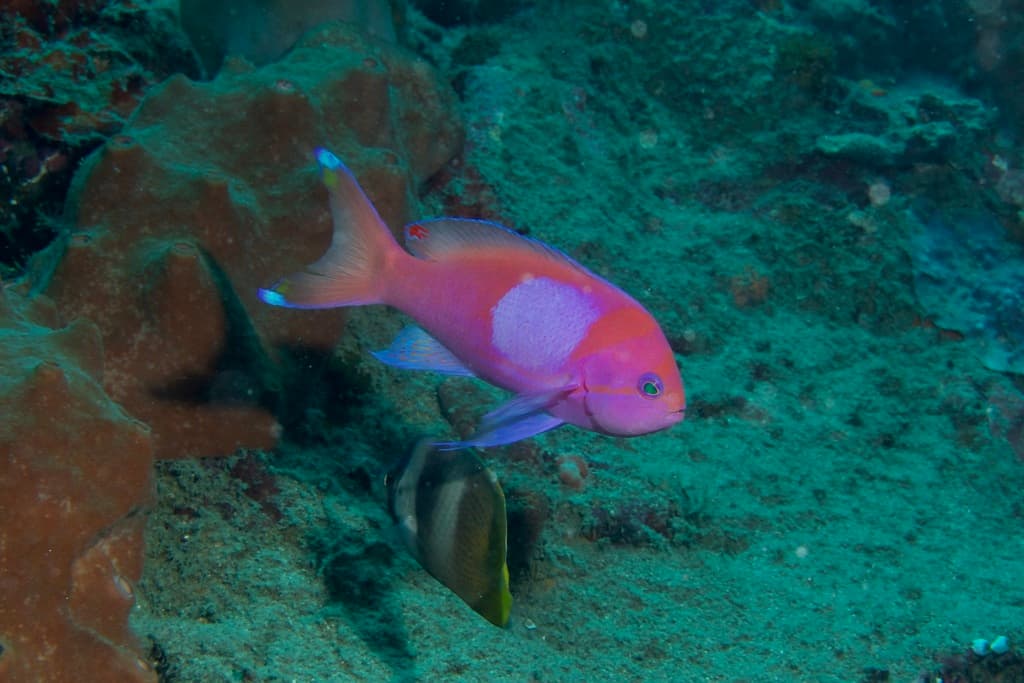
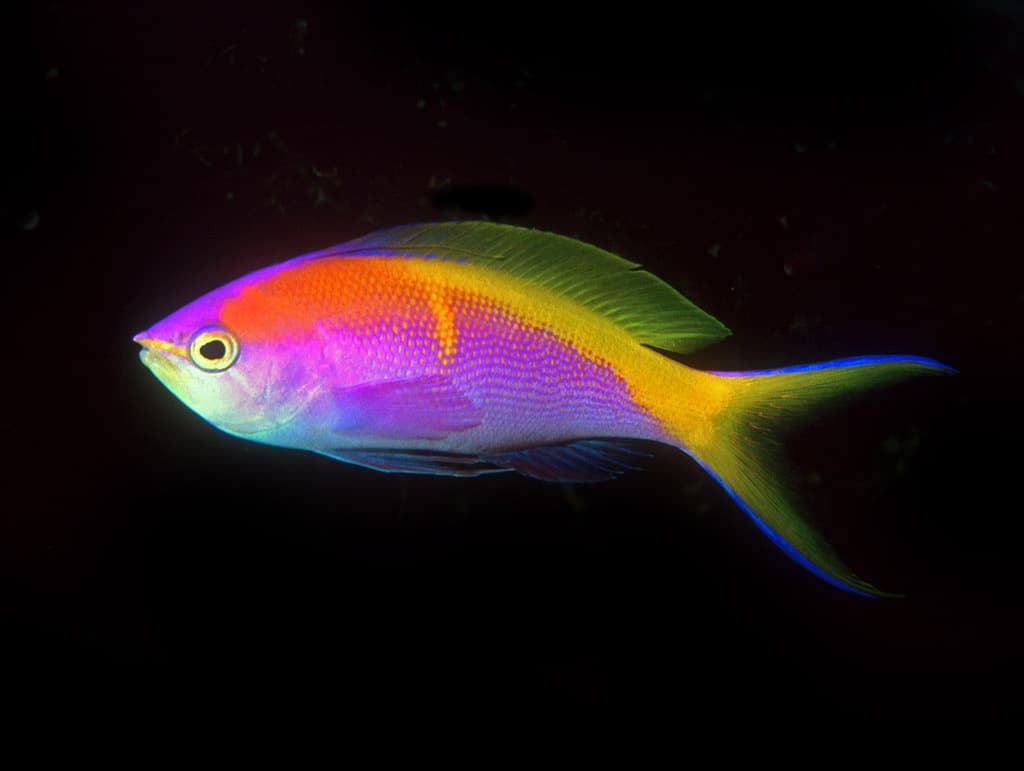
Bartlett's Anthias is a beautifully colored species native to the reef slopes of the western Pacific, where it forms large aggregations above coral outcroppings. Males display a striking combination of violet to magenta along the dorsal portion with a bright yellow underside and tail, while females are a softer lavender-pink with a yellow dorsal edge. Both sexes exhibit the graceful, flowing swimming motion characteristic of anthias.
Considered one of the hardier anthias species available, Bartlett's Anthias is a good choice for aquarists looking to keep anthias for the first time. It adapts more readily to captive foods than many of its relatives and can tolerate minor fluctuations in water quality better than more sensitive species. Nonetheless, frequent feeding remains essential, as its high metabolism demands multiple small meals throughout the day.
Bartlett's Anthias is best maintained in small groups of one male and three to five females in a tank with ample open swimming space and moderate to strong water flow. Like all anthias, this species is a protogynous hermaphrodite, with the dominant female transitioning to male if the existing male is removed. Their peaceful nature, manageable hardiness requirements, and beautiful coloration make them an excellent schooling fish for medium to large reef aquariums.
Feeding & Diet
Planktivore
Bartlett's Anthias are planktivores that feed on zooplankton in the water column. Offer frozen mysis shrimp, enriched brine shrimp, cyclopeeze, and quality marine pellets. Feed at least three times daily. An automatic feeder helps ensure consistent nutrition.
Compatibility
reef-safepeacefulschoolingcommunity-safeplanktivore
Bartlett's Anthias are peaceful and compatible with most reef community fish. Males may spar with each other, so keep only one male per group in most aquariums. They do well with clownfish, tangs, wrasses, gobies, and other non-aggressive species. Avoid housing with overly aggressive tankmates.
Check CompatibilityBreeding
Very Difficult
Like all anthias, Bartlett's Anthias are protogynous hermaphrodites. Spawning occurs at dusk in the water column. Captive breeding is extremely challenging due to the tiny size of larvae and their requirement for specialized live foods. Not commonly bred in home aquariums.
Special Requirements
- Requires multiple feedings per day (3+ minimum)
- Best kept in groups with one male and several females
- Moderate to strong water flow preferred
- Provide open swimming space in upper water column
- Automatic feeder recommended
Water Parameters
Temperature74–80°F
Specific Gravity1.02–1.026 sg
pH8.1–8.4
Alkalinity8–12 dKH
Coloration
magentavioletyellowpinklavender
Tags
reef-safepeacefulschoolingcommunity-safeplanktivore