IntermediatePeacefulReef Safe
Carlsons Anthias
Pseudanthias carlsoni
Family: Serranidae · Anthias
Also known as: Carlson's Fairy Basslet, Carlson's Anthias, Purple Anthias
Randall, John E.
Max Size
3.5"
Min Tank
70 gal
Lifespan
4-6 years
Origin
Western Pacific, Fiji
Diet
Carnivore
Swims
Middle
About
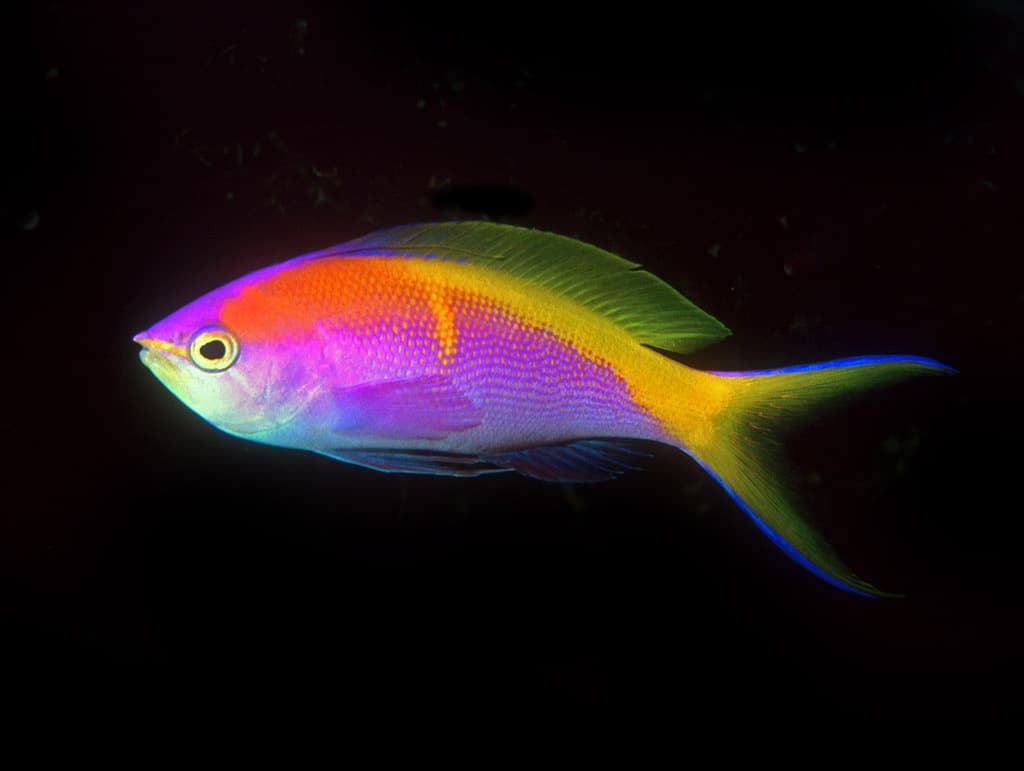
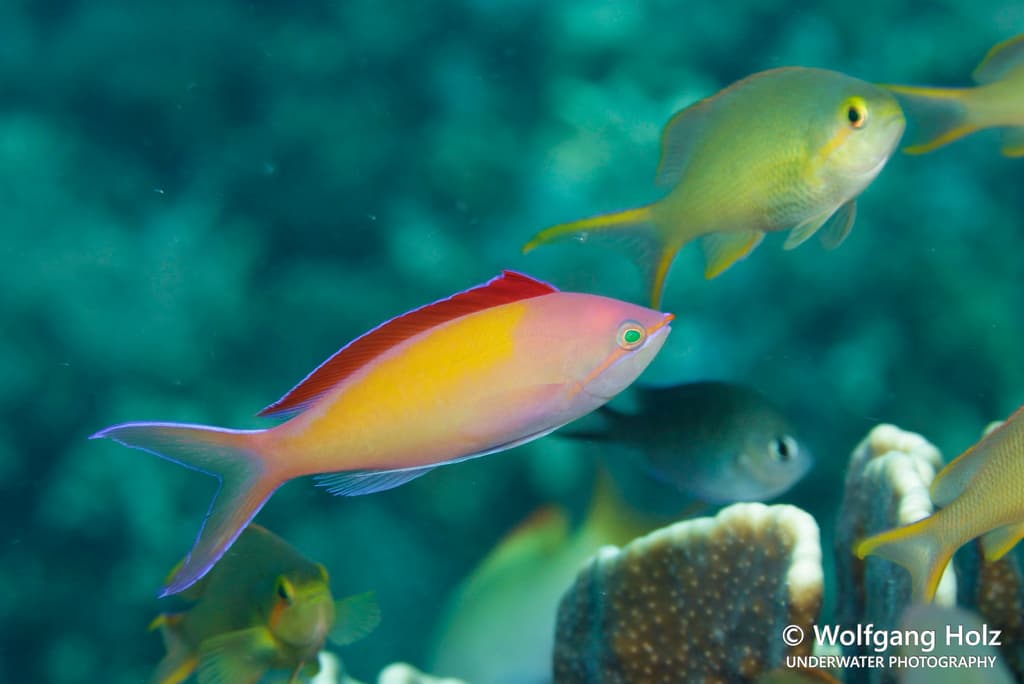
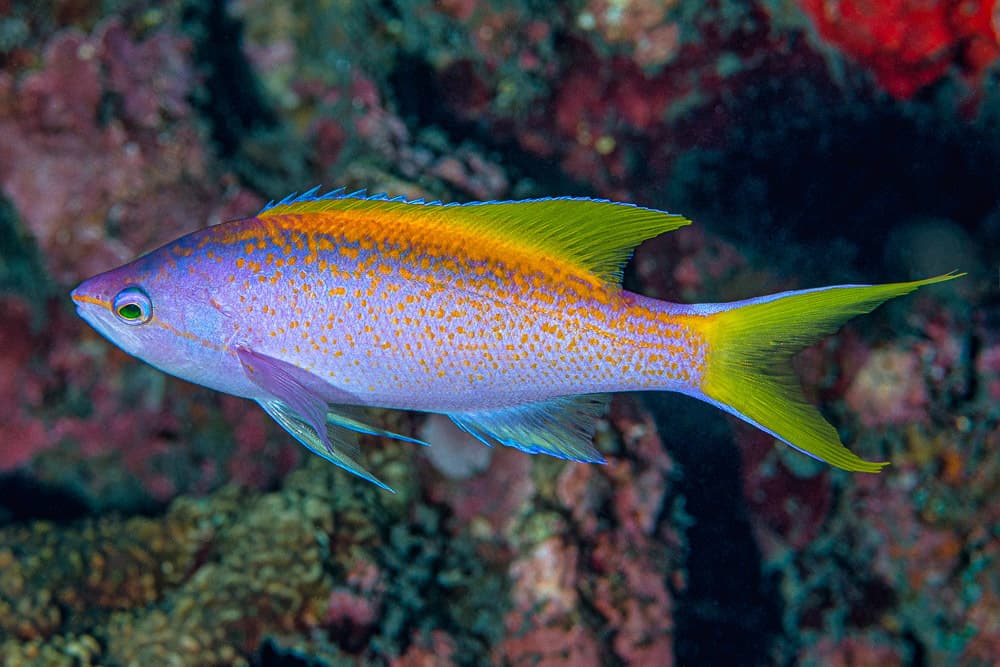
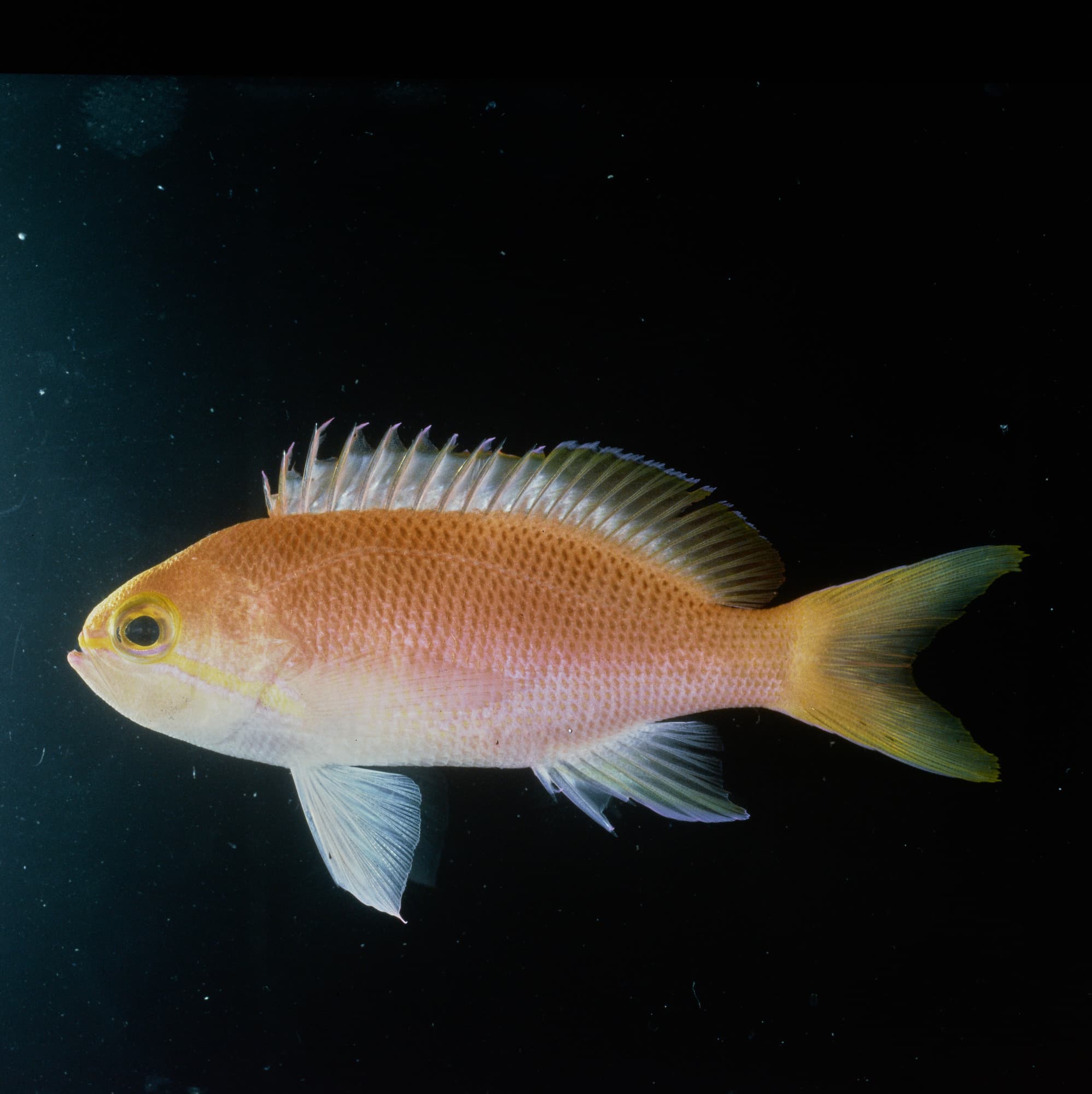
Carlsons Anthias is a small and beautifully colored member of the Pseudanthias genus, prized for its vivid purple and pink coloration. Males display particularly striking hues with elongated dorsal and pelvic fin filaments that trail gracefully as they swim. Females are more subdued in color but still attractive, typically showing a soft lavender to pinkish tone. This species is found in the Western Pacific, often along outer reef slopes at moderate depths.
In the aquarium, Carlsons Anthias is a moderately hardy species that adapts reasonably well to captive conditions compared to some of its more delicate relatives. A 70-gallon tank is the minimum recommended size, providing ample swimming space in the open water column. Like all anthias, this species is a protogynous hermaphrodite and does best when kept in a small harem of one male with several females.
Feeding frequency is critical for long-term success. Carlsons Anthias have a high metabolism and require multiple feedings per day. Offer a varied diet of frozen mysis shrimp, enriched brine shrimp, and quality marine pellets. Strong water flow and excellent water quality are essential for maintaining the health and vibrant coloration of this species.
Feeding & Diet
Carnivore
Carlsons Anthias are carnivorous planktivores that feed primarily on zooplankton in the water column. In captivity, offer frozen mysis shrimp, enriched brine shrimp, cyclops, and high-quality marine pellets. Feed at least three times daily to maintain body condition and vibrant coloration.
Compatibility
reef-safepeacefulschoolingcommunity-safesmall-anthias
Carlsons Anthias are peaceful community fish that coexist well with most reef-safe species. Males may be territorial toward each other, so only one male per group is recommended. They pair well with clownfish, wrasses, tangs, and other peaceful fish.
Check CompatibilityBreeding
Not bred in captivity
Carlsons Anthias are protogynous hermaphrodites, with all individuals starting as female. The dominant female will transform into a male if the existing male is lost. Captive breeding has not been achieved for this species due to the tiny larval size and specialized rearing requirements.
Special Requirements
- Multiple feedings per day required (3+ minimum)
- Best kept in small harems of one male with several females
- Strong water flow recommended
- Excellent water quality essential
- Provide open swimming space in the water column
Water Parameters
Temperature72–80°F
Specific Gravity1.02–1.026 sg
pH8.1–8.4
Alkalinity8–12 dKH
Coloration
purplepinklavendermagenta
Tags
reef-safepeacefulschoolingcommunity-safesmall-anthias