IntermediatePeacefulReef Safe
Bimaculatus Anthias
Pseudanthias bimaculatus
Family: Serranidae · Anthias
Also known as: Twinspot Anthias, Two-Spot Anthias
(c) mken0403, some rights reserved (CC BY-NC)
Max Size
3"
Min Tank
55 gal
Lifespan
5-7 years
Origin
Indo-Pacific, Indonesia
Diet
Planktivore
Swims
Middle
About
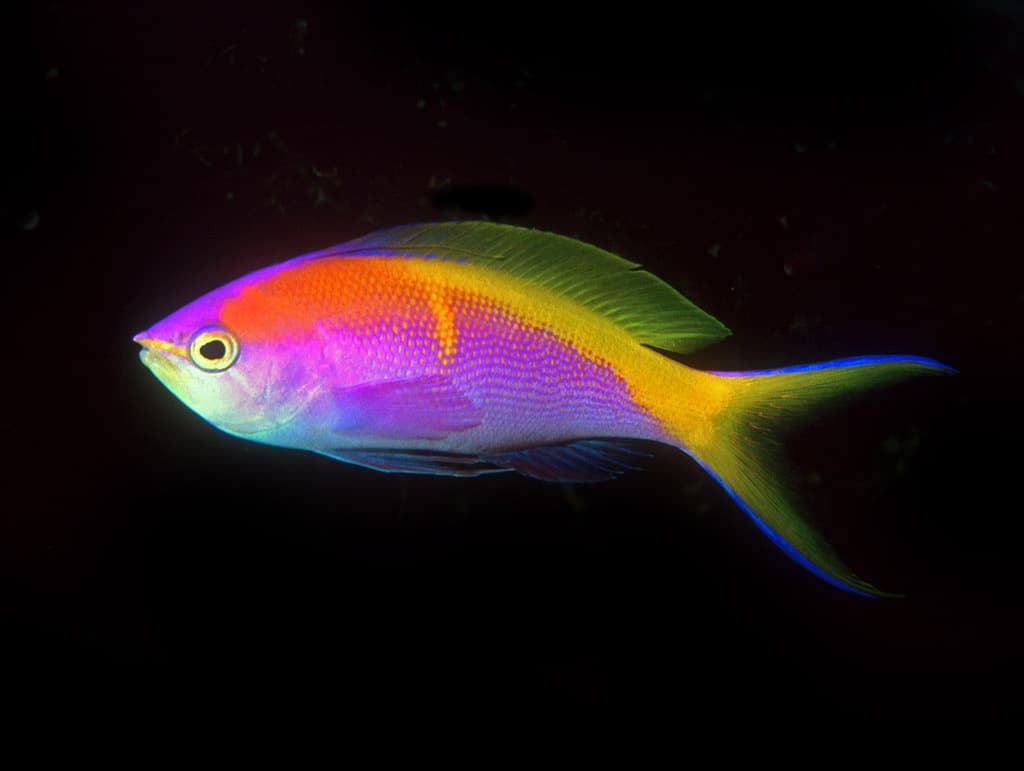
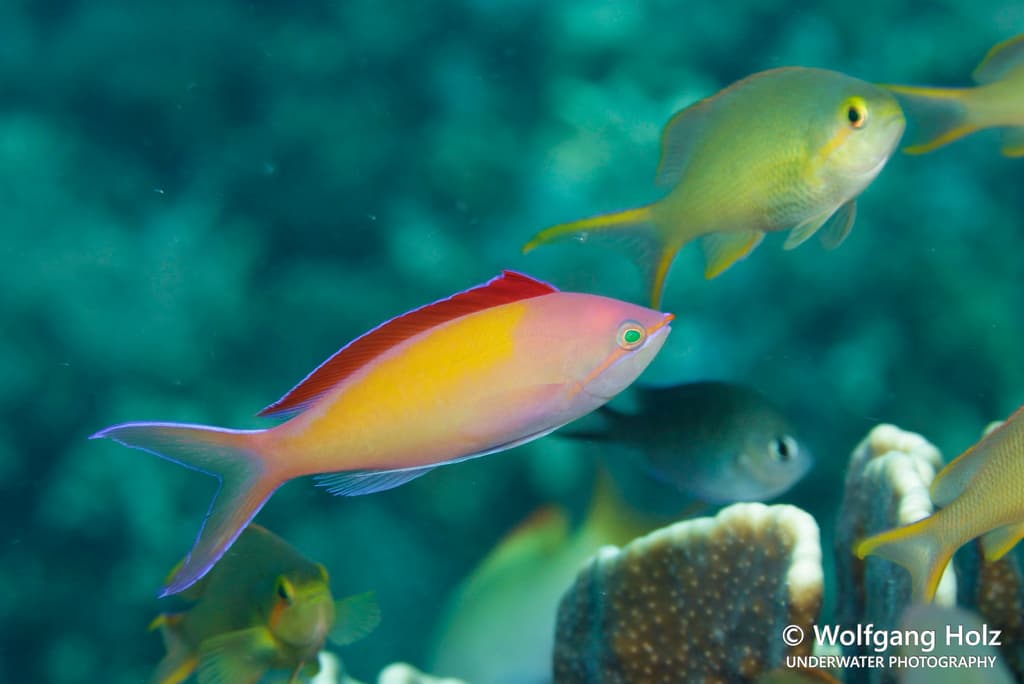
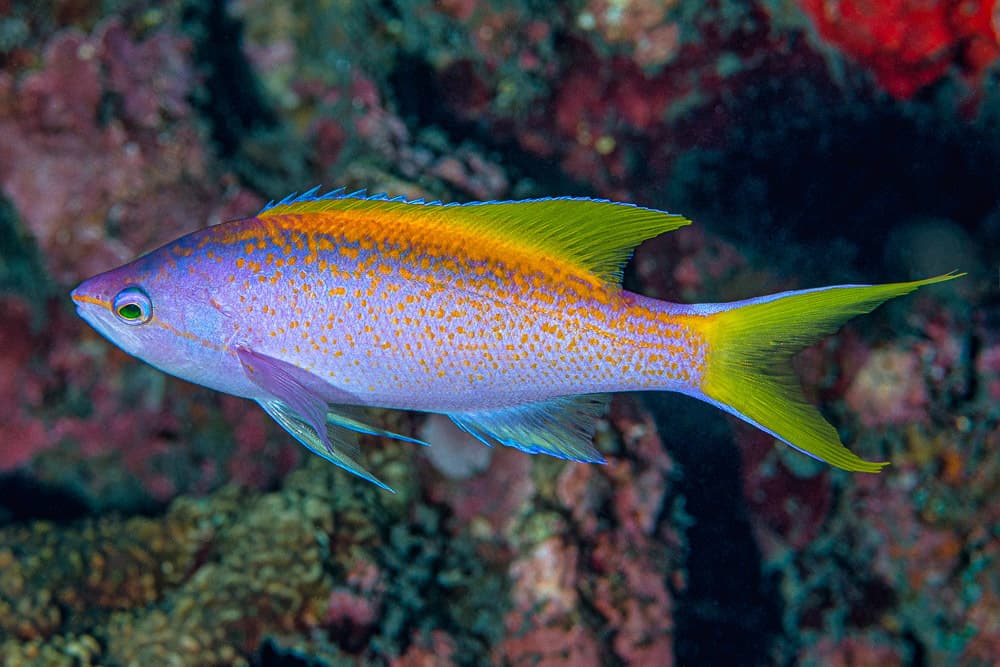
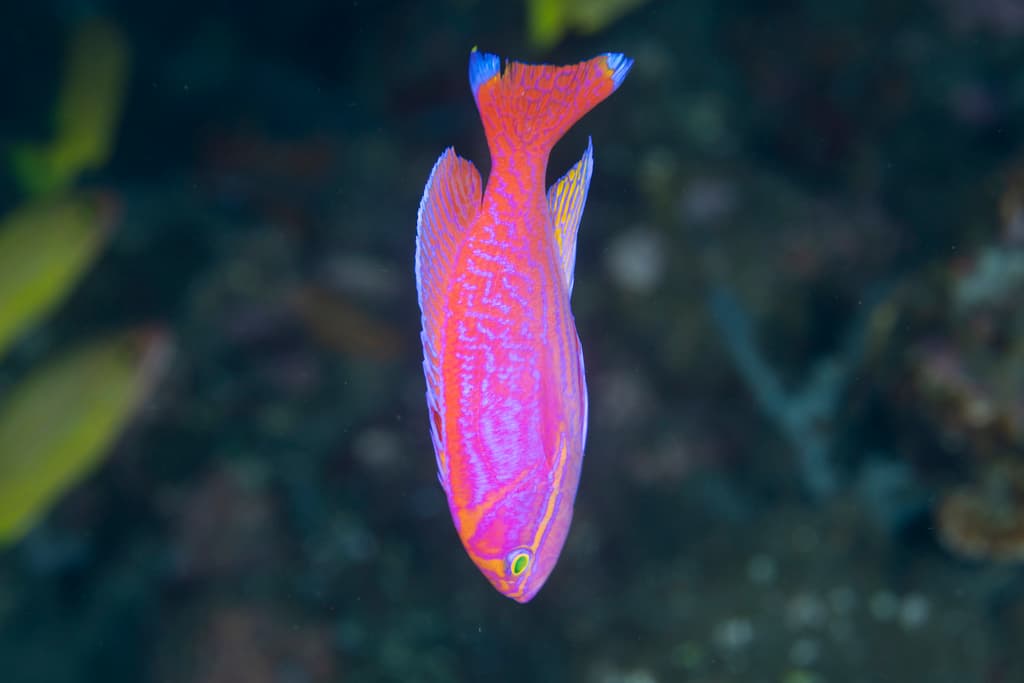
The Bimaculatus Anthias is a delicate and beautifully colored species distinguished by two small dark spots on its body, one near the pectoral fin base and another on the caudal peduncle. Males display a soft pink to magenta coloration with subtle yellow accents along the fins, while females are a gentler pinkish-orange. This species inhabits deeper reef slopes in the Indo-Pacific, typically found at depths of 20 to 50 meters where they form small haremic groups above coral outcroppings.
In captivity, the Bimaculatus Anthias requires stable water conditions and frequent feedings typical of the anthias family. Its moderate care level reflects the fact that while it is not the most demanding anthias, it still requires dedicated attention to feeding schedules and water quality. An automatic feeder dispensing small meals throughout the day is highly recommended to keep this species thriving.
Like all anthias, Pseudanthias bimaculatus is a protogynous hermaphrodite. Maintain a single male with two to four females in the aquarium. If the male is lost, the dominant female will begin transitioning to male within a few weeks. Their peaceful disposition and attractive two-spot pattern make them a lovely addition to a well-maintained reef aquarium.
Feeding & Diet
Planktivore
Bimaculatus Anthias are planktivores that feed on zooplankton in the water column. Offer frozen mysis shrimp, enriched brine shrimp, cyclopeeze, and high-quality marine pellets. Feed at least three times daily to maintain body condition, as anthias have high metabolic rates.
Compatibility
reef-safepeacefulschoolingcommunity-safeplanktivore
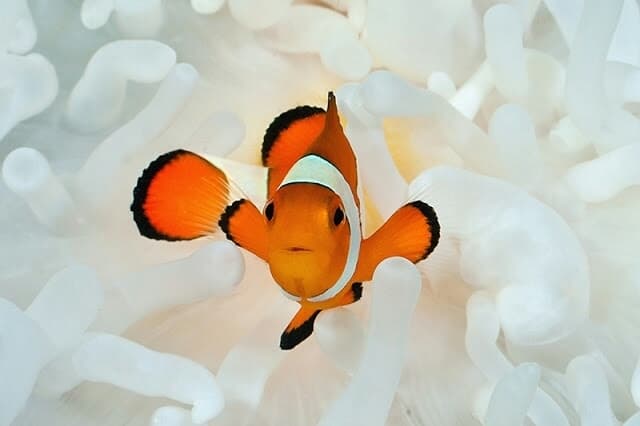
Bimaculatus Anthias are peaceful and get along well with most reef community fish. Keep only one male per group to avoid aggression. They coexist well with clownfish, tangs, wrasses, gobies, and other non-aggressive species.
Check CompatibilityBreeding
Very Difficult
Like all anthias, Bimaculatus Anthias are protogynous hermaphrodites. Spawning occurs at dusk in the water column. Captive breeding is extremely challenging due to the tiny larvae requiring specialized live foods.
Special Requirements
- Requires multiple feedings per day (3+ minimum)
- Best kept in a harem of one male with several females
- Moderate water flow preferred
- Provide open swimming space in middle water column
- Automatic feeder highly recommended
Water Parameters
Temperature72–78°F
Specific Gravity1.02–1.026 sg
pH8.1–8.4
Alkalinity8–12 dKH
Coloration
pinkmagentaorangeyellow
Tags
reef-safepeacefulschoolingcommunity-safeplanktivore