ExpertPeacefulReef Safe
Tubelip Wrasse
Labropsis australis
Family: Labridae · Wrasses
Also known as: Tube-Lip Wrasse, Southern Tubelip Wrasse, Australian Tubelip
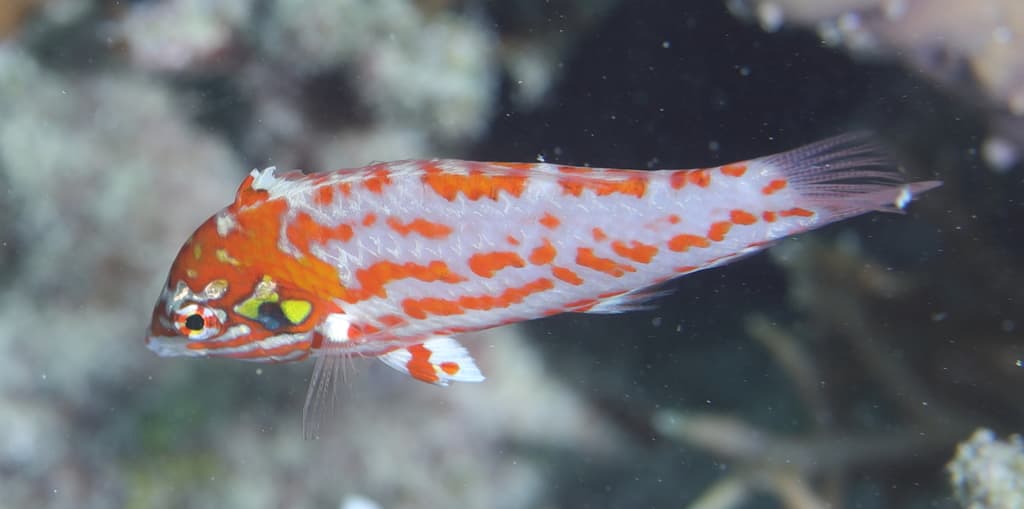
(c) Mark Rosenstein, some rights reserved (CC BY-NC)
Max Size
5.5"
Min Tank
55 gal
Lifespan
3-5 years in captivity (often much less)
Origin
Western Pacific, Australia
Diet
Carnivore
Swims
Middle
About
The Tubelip Wrasse is one of the most specialized and challenging wrasses in the marine aquarium trade. Its common name comes from its distinctive tubular lips, which are uniquely adapted for feeding on coral mucus and the film of microorganisms that coat reef surfaces. This highly specialized feeding strategy makes the Tubelip Wrasse extraordinarily difficult to maintain in captivity, as replicating its natural diet is nearly impossible.
In the wild, Tubelip Wrasses spend their entire day methodically moving across coral colonies, using their tube-shaped lips to suck the mucus layer from coral surfaces. While this feeding behavior does not appear to harm the corals significantly in natural settings, it represents a dietary specialization that cannot be easily replicated in aquariums. Most Tubelip Wrasses refuse all prepared and frozen foods in captivity and slowly starve.
Despite its small size and peaceful nature, the Tubelip Wrasse should only be attempted by expert aquarists who maintain large, mature reef systems with extensive coral coverage and are willing to accept the high likelihood of failure. Even in the best conditions, many specimens fail to transition to captive foods. This is strictly an expert-only species, and many experienced aquarists advocate against keeping them at all due to the poor survival rates.
Feeding & Diet
Carnivore
Tubelip Wrasses are obligate mucus feeders that consume coral mucus and biofilm in the wild. In captivity, they almost universally refuse prepared foods. Attempts to feed them should include live copepods, live rotifers, live brine shrimp, and various frozen foods offered in small, frequent portions. A mature reef tank with extensive live coral and natural biofilm production is essential. Even with ideal conditions, most specimens fail to feed adequately in captivity.
Compatibility
reef-safepeacefulexpert-onlysensitivespecialized-feeder
The Tubelip Wrasse is completely peaceful and does not bother any tankmates. It should be housed only with other peaceful species that will not outcompete it for the limited food it may accept. Avoid aggressive or highly competitive feeders. While classified as reef-safe, its natural feeding behavior involves consuming coral mucus, though this typically causes minimal harm to healthy corals in large systems.
Check CompatibilityBreeding
Not bred in captivity
Tubelip Wrasses are protogynous hermaphrodites. Very little is known about their reproductive behavior in the wild. Captive breeding has not been achieved, and the extreme difficulty of maintaining adults makes breeding attempts impractical. All specimens in the trade are wild-caught.
Special Requirements
- Expert-only species - extremely poor captive survival rate
- Obligate coral mucus feeder - nearly impossible to wean onto prepared foods
- Mature reef tank with extensive live coral coverage essential
- Sand substrate of 2+ inches required for sleeping
- Tight-fitting lid essential - known jumper
- Pristine water quality required
- Many experienced aquarists advise against keeping this species
Water Parameters
Temperature74–78°F
Specific Gravity1.023–1.026 sg
pH8.1–8.4
Alkalinity8–12 dKH
Coloration
brownyellowblueblack
Tags
reef-safepeacefulexpert-onlysensitivespecialized-feeder