IntermediatePeacefulReef Safe
Golden Head Sleeper Goby
Valenciennea strigata
Family: Gobiidae · Gobies
Also known as: Blue Cheek Goby, Bluestreak Goby, Pennant Glider, Blue Streak Prawn Goby
(c) Ian Shaw, all rights reserved
Max Size
7"
Min Tank
55 gal
Lifespan
3-6 years
Origin
Indo-Pacific, Red Sea
Diet
Carnivore
Swims
Bottom
About
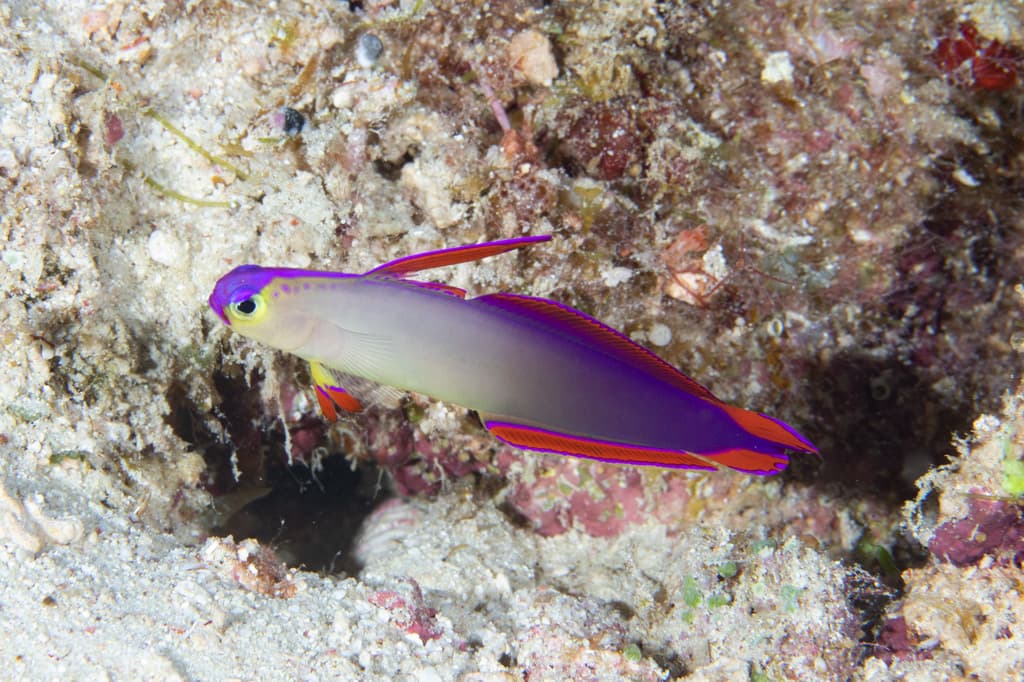
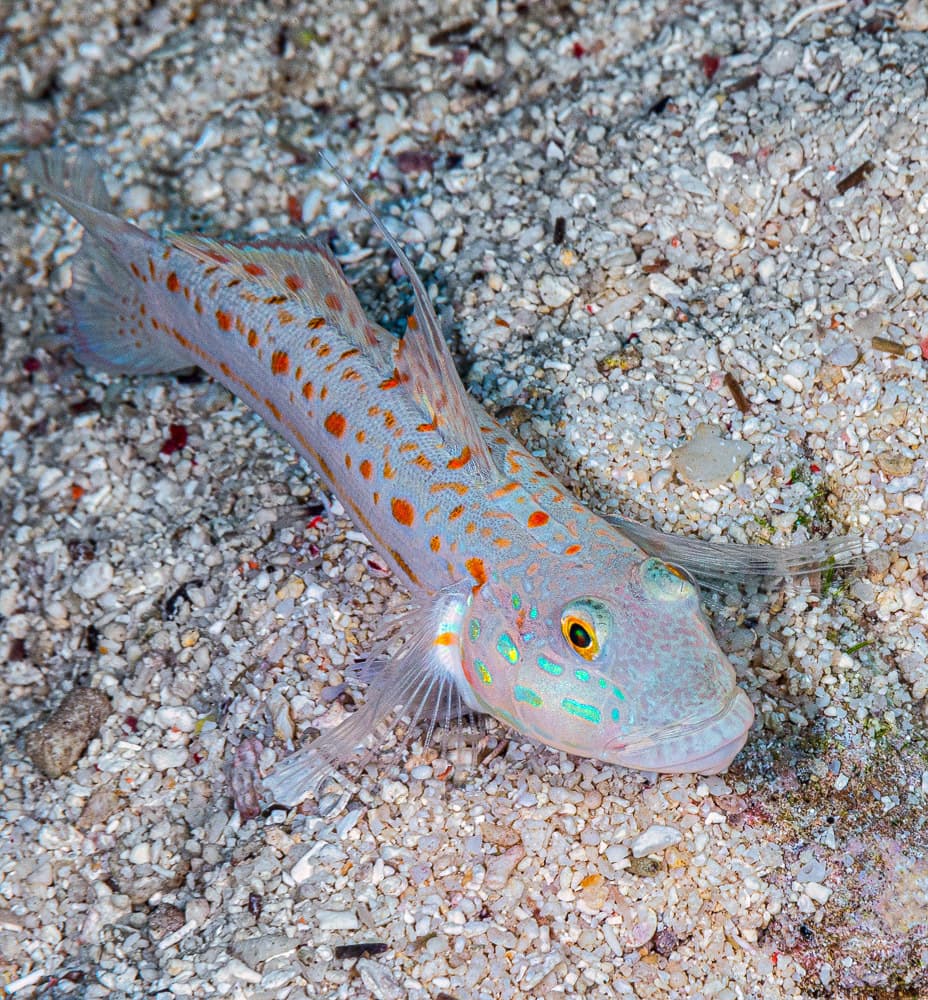
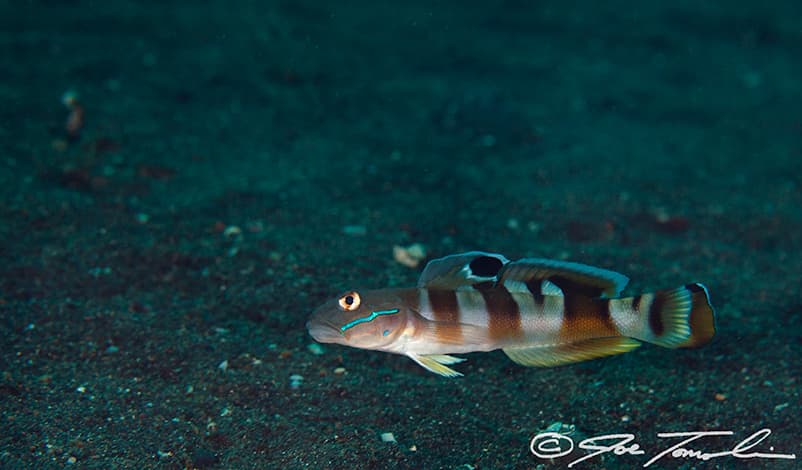
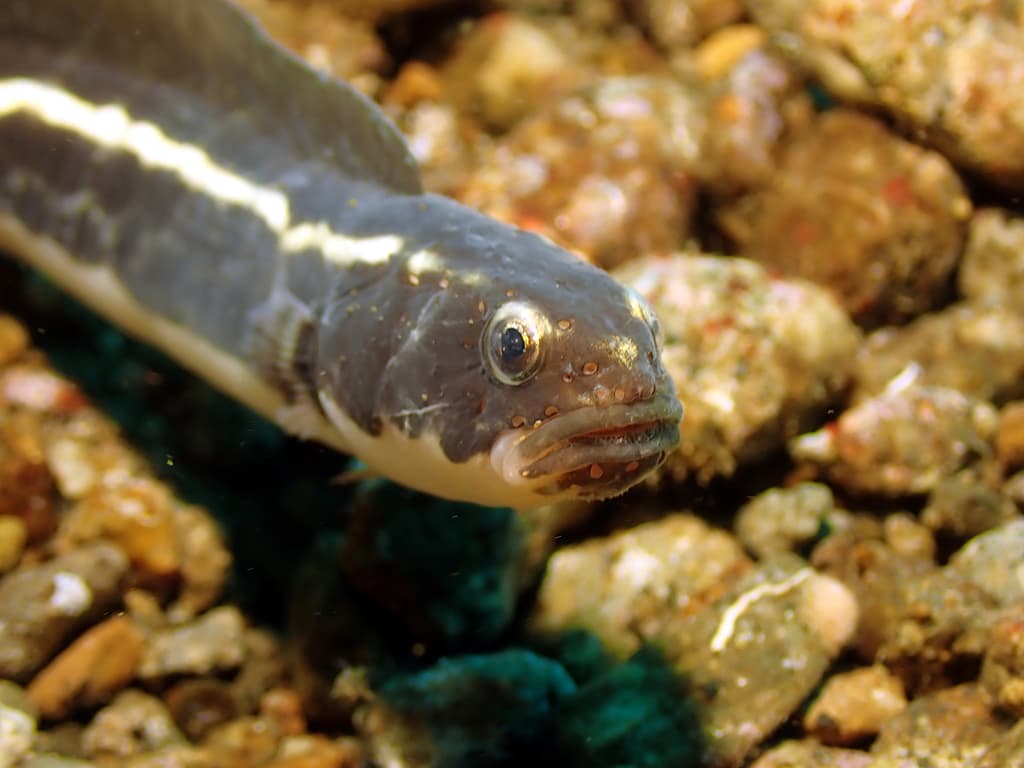
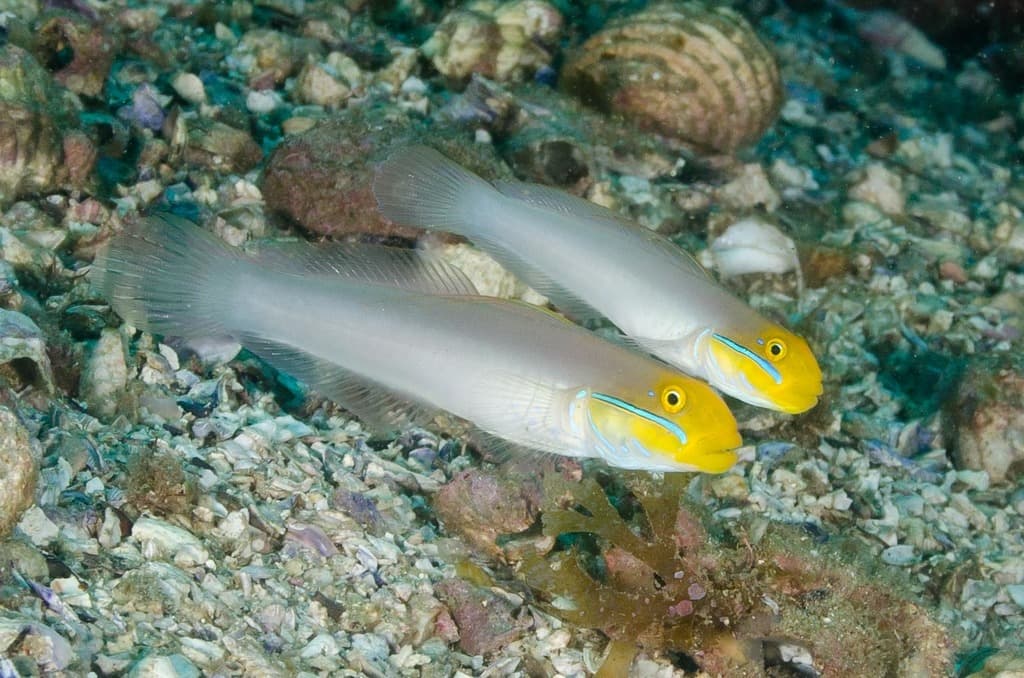
The Blue Cheek Goby is one of the most popular and recognizable sand-sifting gobies in the marine aquarium hobby. It features a distinctive golden-yellow head that transitions to a white to silvery body, with a vivid electric-blue streak running along each cheek from the eye toward the gill cover. This striking color combination, along with its relatively large size of up to 7 inches, makes it a standout species in any reef display.
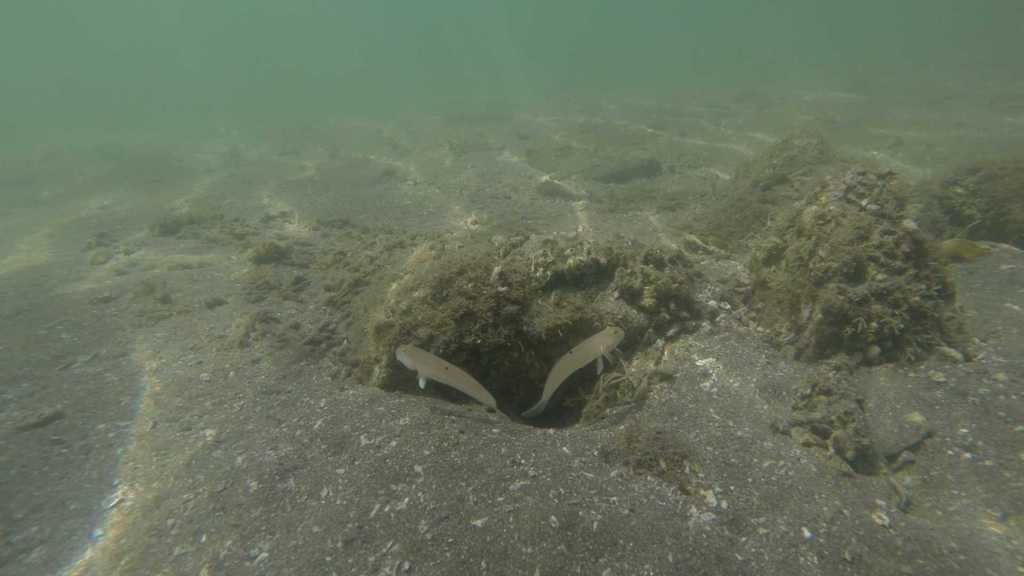
As a member of the Valenciennea genus, the Blue Cheek Goby is an industrious sand-sifter that spends its days scooping mouthfuls of substrate, filtering out tiny invertebrates and detritus, and expelling clean sand through its gills. This behavior provides a valuable maintenance function by keeping the sand bed turned over, aerated, and free of accumulated waste. The goby also excavates a burrow for shelter, often beneath rockwork or along the base of the aquarium.
This species requires a well-established aquarium of at least 55 gallons with a mature, biologically active sand bed. In newly set up or sterile sand beds, the goby may struggle to find sufficient natural food and can lose condition. Supplemental feeding with frozen mysis shrimp and enriched brine shrimp targeted to the substrate is important. A secure lid is absolutely essential, as the Blue Cheek Goby is one of the most persistent jumpers in the hobby.
Feeding & Diet
Carnivore
Blue Cheek Gobies are carnivorous sand-sifters that filter microfauna and detritus from the substrate. Supplement their natural foraging with frozen mysis shrimp, enriched brine shrimp, and finely chopped seafood directed to the sand bed. Feed two to three times daily, especially in tanks with less mature sand beds.
Compatibility
reef-safepeacefulsand-siftercommunity-safesubstrate-maintenance
Blue Cheek Gobies are peaceful community fish that coexist well with most reef-safe species. They can be territorial toward other sand-sifting gobies, so keep only one Valenciennea species per tank unless the system is very large. Best kept singly or as a mated pair.
Check CompatibilityBreeding
Difficult
Blue Cheek Gobies form monogamous pairs and spawn within their burrow. Both parents guard the eggs. Larvae are planktonic and extremely small, making successful captive rearing very challenging and rarely accomplished.
Special Requirements
- Mature sand bed with established microfauna essential
- Sand substrate of 2+ inches required for sifting and burrowing
- Tight-fitting lid absolutely essential - persistent jumper
- May bury coral frags and small items placed on the sand
- Supplemental feeding critical in tanks with sterile sand beds
- 55+ gallon tank needed due to larger adult size
Water Parameters
Temperature72–80°F
Specific Gravity1.02–1.026 sg
pH8.1–8.4
Alkalinity8–12 dKH
Coloration
yellowwhitebluesilver
Tags
reef-safepeacefulsand-siftercommunity-safesubstrate-maintenance