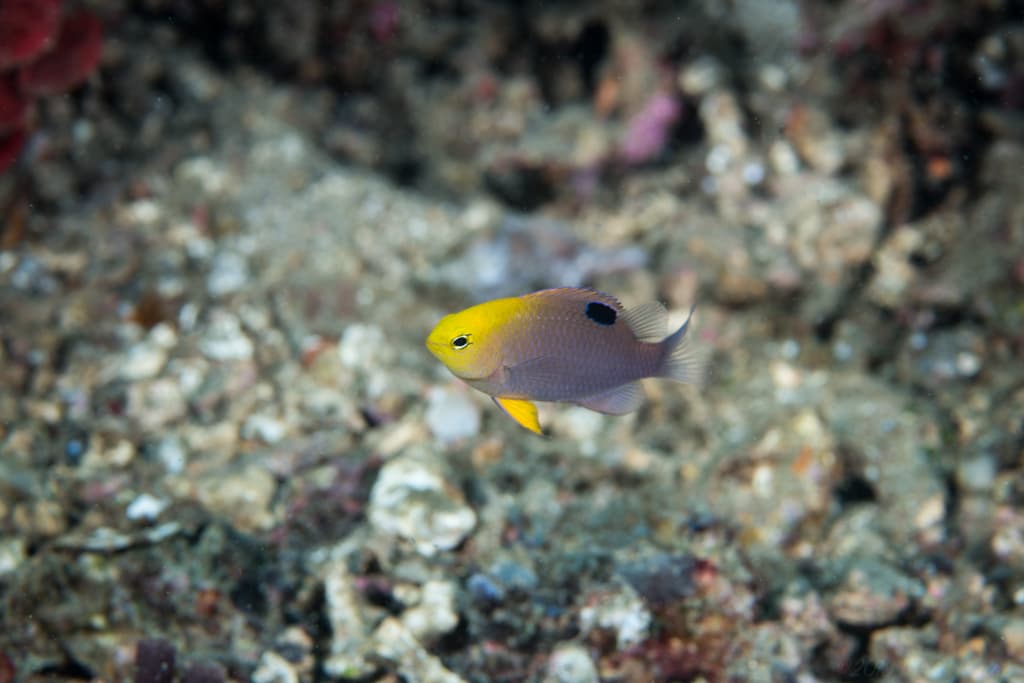
BeginnerSemi-AggressiveReef SafeIUCN: Not Evaluated
Springer's Damselfish
Chrysiptera springeri
Family: Pomacentridae · Chromis & Damselfish
Also known as: Springer's Demoiselle, Blue Sapphire Damselfish, Springer's Blue Damselfish
(c) Rebecca Lloyd, some rights reserved (CC BY-NC)
Max Size
2"
Min Tank
20 gal
Lifespan
5-8 years
Origin
Western Pacific, Indonesia
Diet
Omnivore
Swims
Middle
Did You Know?
- Springer's Damselfish is named after Dr. Victor G. Springer, a renowned ichthyologist at the Smithsonian Institution who made major contributions to the study of blennies and other reef fish
- At just two inches maximum size, it is one of the smallest damselfish commonly kept in aquariums, making it one of the few damsels truly suitable for nano reef tanks
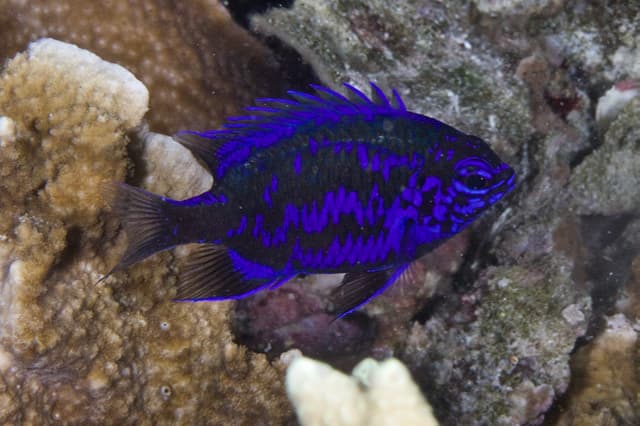
- The bold blue and black banding pattern is unique among commonly available damselfish and makes this species instantly identifiable
About
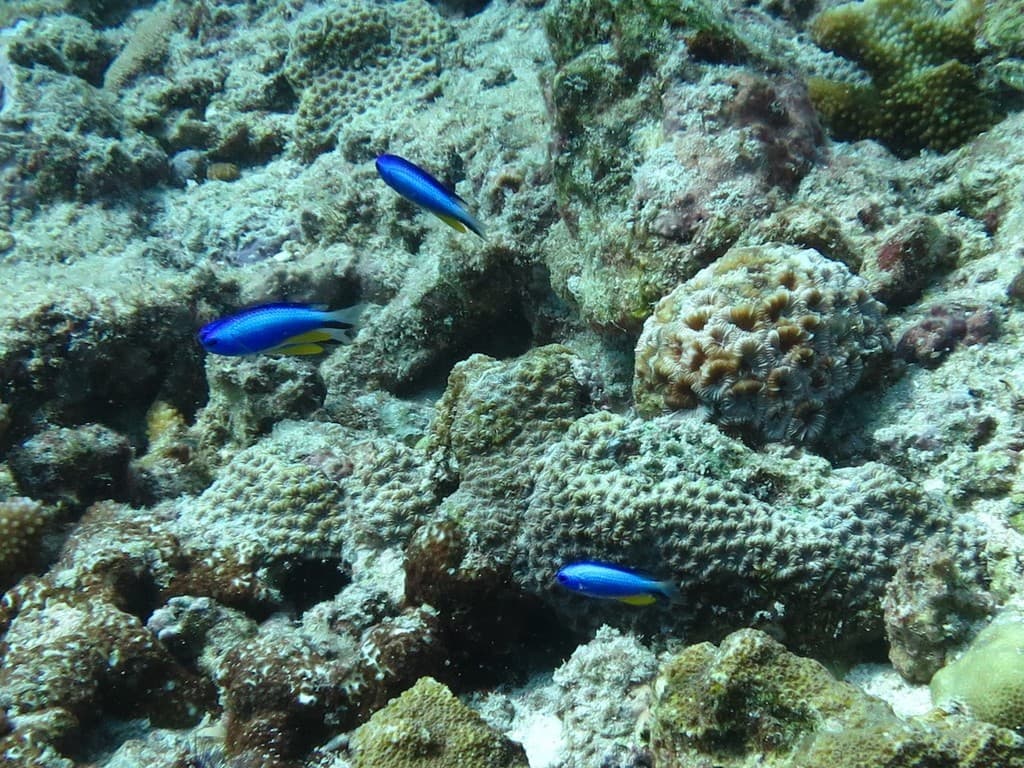
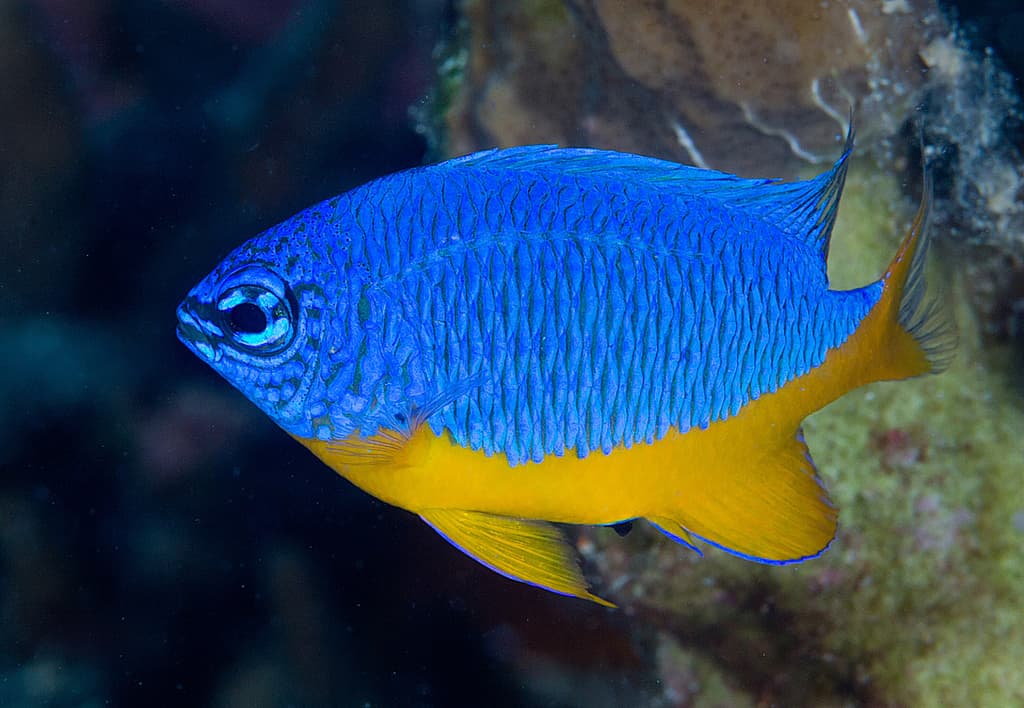
Springer's Damselfish is a jewel-like species that packs an extraordinary amount of visual impact into its tiny two-inch frame. Its body is a deep, luminous sapphire blue accented by bold vertical black bars or bands that create a striking graphic pattern unlike any other commonly available damselfish. Depending on the fish's mood, lighting conditions, and geographic origin, the blue can range from a rich cobalt to an almost electric neon blue, and the black banding may vary in intensity and width. This distinctive patterning has earned it the alternative common name 'Blue Sapphire Damselfish.'
In the wild, Springer's Damselfish is found in the Western Pacific, particularly around Indonesia and the Philippines, where it inhabits shallow coral reefs and rubble areas. It is typically found in small groups associated with branching corals and rocky crevices at relatively shallow depths. Its small territory size and moderate temperament make it one of the better-behaved members of the damselfish family, displaying territorial chasing that is brief and rarely escalates to the sustained aggression for which larger damselfish species are notorious.
Springer's Damselfish is an ideal reef aquarium candidate for beginners, combining exceptional coloration, small adult size, complete reef compatibility, and outstanding hardiness. Its maximum size of approximately two inches makes it one of the smallest and most manageable damselfish available, suitable for nano reef tanks as small as 20 gallons. While it may occasionally chase fish that venture too close to its preferred hiding spot, its small size limits the impact of any territorial behavior. Multiple individuals can be kept together in larger tanks provided they are introduced simultaneously and given adequate rockwork with separate hiding spots.
Feeding & Diet
Omnivore
Springer's Damselfish is an omnivore that feeds on zooplankton, small crustaceans, and algae in the wild. In captivity, it readily accepts all common aquarium foods including marine flakes, pellets, frozen mysis shrimp, enriched brine shrimp, and Spirulina-based preparations. Its small mouth size means it prefers finely chopped or small-particle foods. Feed two to three times daily with a varied diet including both meaty and vegetable-based offerings for optimal health.
Compatibility
reef-safesemi-aggressivenano-compatiblehardybeginner-friendlycommunity-safe
Springer's Damselfish is semi-aggressive but its tiny size limits the impact of territorial behavior. It may chase conspecifics and similarly sized fish near its territory but rarely causes harm. Compatible with clownfish, wrasses, tangs, blennies, and most community reef fish. Its small size means it can be bullied by larger aggressive species, so avoid housing with highly territorial fish. Completely reef-safe with all corals and invertebrates. Multiple specimens can coexist in tanks of 40 gallons or more with adequate rockwork.
Check CompatibilityBreeding
Difficult
Springer's Damselfish are substrate spawners that follow the typical damselfish reproductive pattern. Males prepare nest sites on cleaned surfaces and court females with vigorous swimming displays. After spawning, the male guards the adhesive eggs for 3-5 days until hatching. Larvae are extremely small and pelagic, requiring rotifers and phytoplankton as first foods. Captive breeding is challenging due to the tiny larval size, though spawning events are regularly observed in mature aquariums.
Special Requirements
- Provide rockwork with small caves and crevices for territory
- Small size makes it suitable for nano reef tanks
- Semi-aggressive but less so than many damselfish due to small size
- Can be kept in small groups if added simultaneously to larger tanks
- Prefers small-particle foods appropriate for its small mouth
- Hardy and disease-resistant - excellent for beginners
Water Parameters
Temperature72–82°F
Specific Gravity1.02–1.026 sg
pH8–8.4
Alkalinity8–12 dKH
Coloration
blueblacksapphire
Tags
reef-safesemi-aggressivenano-compatiblehardybeginner-friendlycommunity-safe