ExpertPeacefulReef Safe with Caution
Japanese Pygmy Angelfish
Centropyge interruptus
Family: Pomacanthidae · Dwarf Angelfish
Also known as: Japanese Angelfish, Interruptus Angelfish
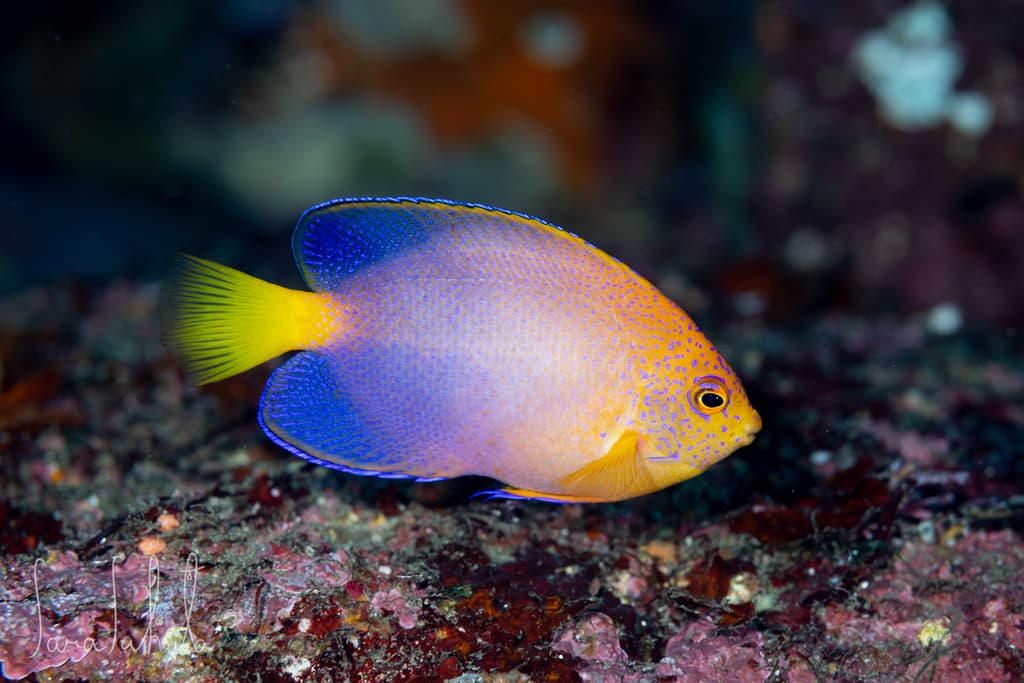
(c) さら, some rights reserved (CC BY-NC)
Max Size
4"
Min Tank
55 gal
Lifespan
5-10 years
Origin
Japan, Northwestern Pacific
Diet
Omnivore
Swims
Middle
About
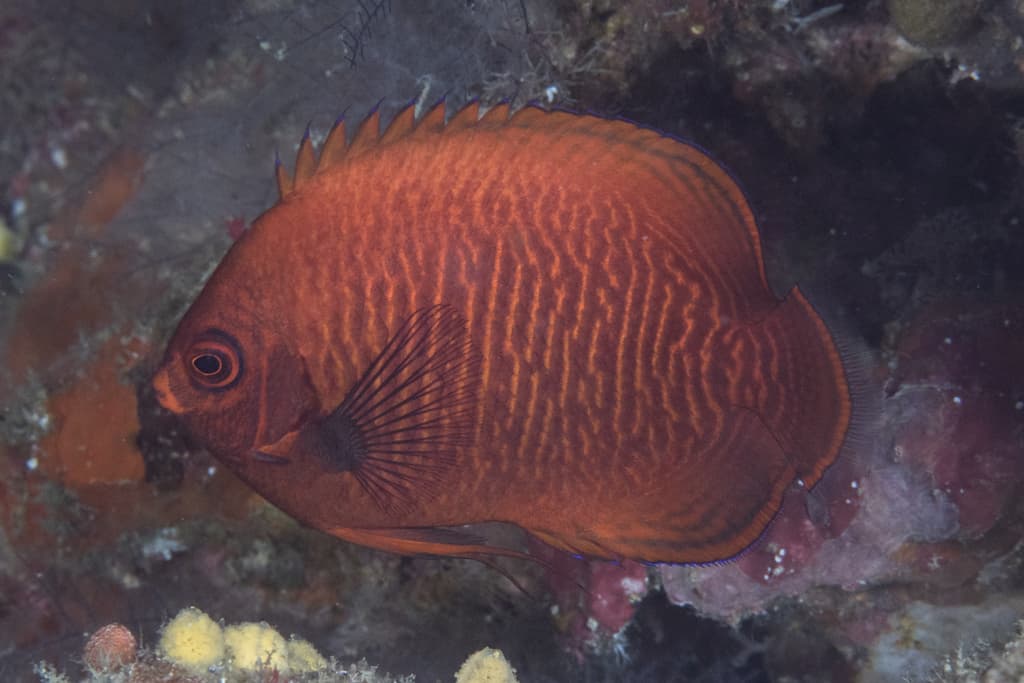
The Japanese Pygmy Angelfish is widely regarded as the holy grail of dwarf angelfish, commanding prices that can exceed several thousand dollars per specimen. Its breathtaking coloration features a rich blend of deep blue and vivid orange arranged in a unique pattern, with the orange concentrated on the lower body and the blue dominating the upper portions. The interplay of these two colors, combined with its extreme rarity, makes it one of the most coveted marine fish in the world.
Endemic to the waters of southern Japan, particularly around the Izu and Ogasawara Islands, the Japanese Pygmy Angelfish inhabits deep rocky reefs at depths typically between 15 and 60 meters. Its restricted geographic range and the difficulty of deep-water collection make it exceedingly rare in the aquarium trade. Only a handful of specimens become available each year, primarily from Japanese collectors.
Keeping this species in captivity is reserved for expert-level aquarists due to its extreme rarity, high cost, and sensitivity. The Japanese Pygmy Angelfish requires pristine water conditions, a well-established aquarium with mature live rock, and a peaceful environment free from aggressive tank mates. Specimens that successfully acclimate can be surprisingly resilient, but the initial transition to captivity is the most critical period. This is a fish for the dedicated collector who can provide optimal conditions.
Feeding & Diet
Omnivore
Japanese Pygmy Angelfish are omnivores that feed on microalgae, sponges, and small invertebrates in the wild. In captivity, offer a varied diet including high-quality angelfish preparations with sponge, frozen mysis shrimp, enriched brine shrimp, and spirulina-based foods. Newly imported specimens may require live foods to initiate feeding.
Compatibility
reef-cautionpeacefulcommunity-compatibledelicate
The Japanese Pygmy Angelfish is peaceful and should be housed with equally non-aggressive tank mates. Avoid pairing with boisterous or territorial fish that could stress this valuable species. Keep only one dwarf angelfish per tank to prevent territorial conflicts.
Check CompatibilityBreeding
Extremely Difficult
The Japanese Pygmy Angelfish has not been bred in captivity on any scale. Its extreme rarity makes breeding pairs nearly impossible to obtain. Like other Centropyge, it is a protogynous hermaphrodite and pelagic spawner.
Special Requirements
- Extremely rare and expensive — one of the most coveted marine fish in the hobby
- Prefers cooler water temperatures than most tropical marine fish
- Japanese endemic — limited collection area contributes to extreme rarity
- Pristine water quality is essential — zero tolerance for poor conditions
- Peaceful environment free from aggressive tank mates is critical
Water Parameters
Temperature68–76°F
Specific Gravity1.02–1.026 sg
pH8.1–8.4
Alkalinity8–12 dKH
Coloration
blueorange
Tags
reef-cautionpeacefulcommunity-compatibledelicate