AdvancedPeacefulReef Safe with Caution
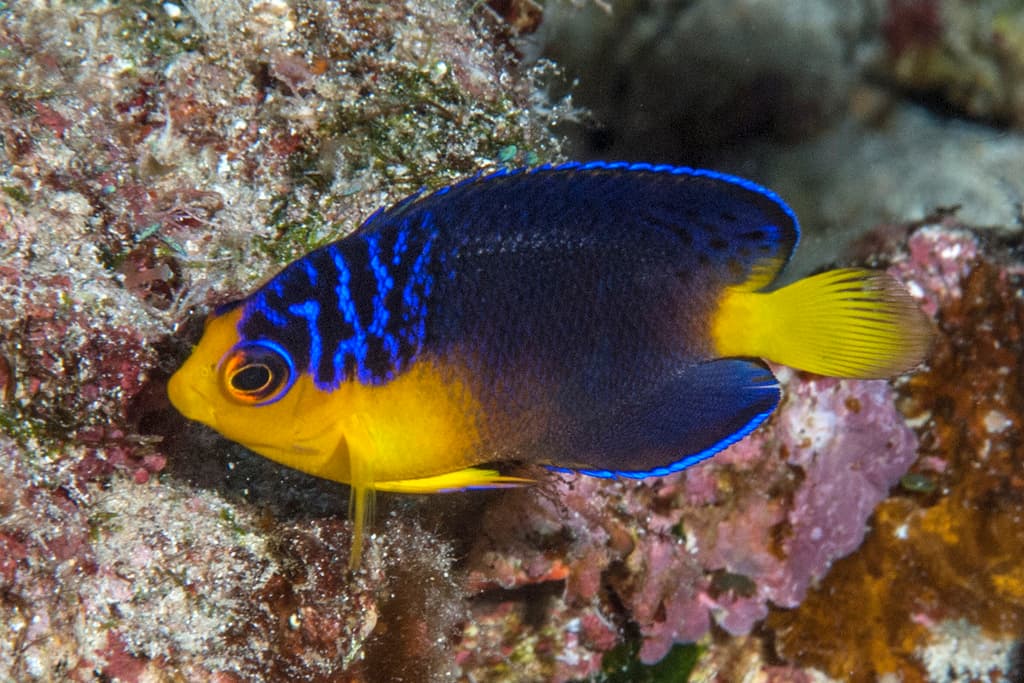
Golden Angelfish
Centropyge aurantia
Family: Pomacanthidae · Dwarf Angelfish
Also known as: Golden Pygmy Angelfish, Aurantia Angelfish, Golden Dwarf Angelfish
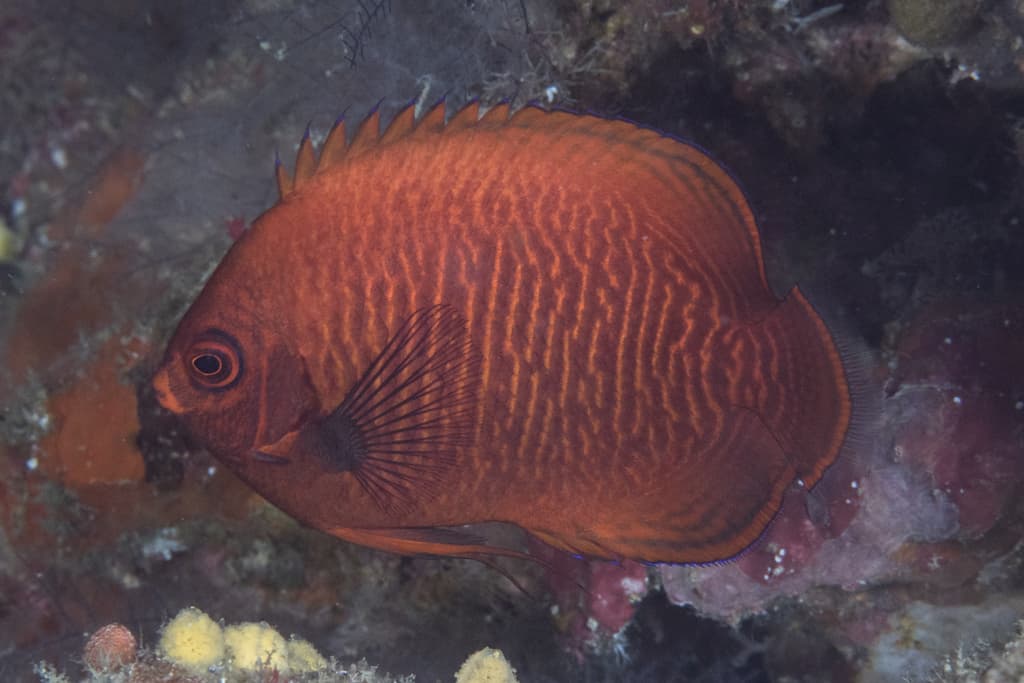
(c) Mark Rosenstein, some rights reserved (CC BY-NC)
Max Size
3"
Min Tank
55 gal
Lifespan
5-10 years
Origin
Western Pacific, Indonesia
Diet
Omnivore
Swims
Middle
About
The Golden Angelfish is one of the most elusive and sought-after dwarf angelfish in the marine aquarium hobby. Its entire body is bathed in a deep, rich golden-orange hue with subtle darker orange vertical barring, giving it an almost luminous appearance. This rare species commands high prices and is considered a prize addition for dedicated collectors and experienced aquarists.
In the wild, the Golden Angelfish is found in the Western Pacific, primarily around Indonesia, Papua New Guinea, and Samoa. It inhabits outer reef slopes and drop-offs at moderate to deep depths, typically between 15 and 60 meters. The species is naturally shy and secretive, spending much of its time hiding among rubble and coral crevices, which contributes to its rarity in the aquarium trade.
Keeping the Golden Angelfish in captivity requires patience and an experienced hand. Specimens are often reluctant to feed when first introduced and may remain hidden for extended periods. A mature aquarium with abundant live rock, subdued lighting, and minimal competition from aggressive tank mates provides the best environment for acclimation. Once settled, the Golden Angelfish becomes a stunning and rewarding addition to a carefully managed marine system.
Feeding & Diet
Omnivore
Golden Angelfish are omnivores that graze on microalgae, sponges, and tiny invertebrates in the wild. In captivity, offer a varied diet of spirulina preparations, frozen mysis shrimp, enriched brine shrimp, and angelfish formulas with sponge. Newly imported specimens may need live enriched brine shrimp to initiate feeding.
Compatibility
reef-cautionpeacefulcommunity-compatiblecoral-nipper-risk
The Golden Angelfish is one of the most peaceful dwarf angelfish species. Avoid housing with aggressive or boisterous tank mates that may outcompete it for food or bully it into hiding. Pair with gentle community fish and provide ample rockwork for retreat.
Check CompatibilityBreeding
Extremely Difficult
The Golden Angelfish has not been bred in captivity. Like other Centropyge species, it is a protogynous hermaphrodite and pelagic spawner. Its rarity and difficulty of keeping make breeding attempts exceptionally uncommon.
Special Requirements
- Extremely rare and expensive — recommended for experienced aquarists only
- Naturally shy — provide abundant hiding spots and subdued lighting
- May be reluctant to feed initially — offer live enriched brine shrimp
- Keep only one dwarf angelfish per tank unless system is very large
- Established aquarium with mature live rock is essential
Water Parameters
Temperature72–78°F
Specific Gravity1.02–1.026 sg
pH8.1–8.4
Alkalinity8–12 dKH
Coloration
goldorange
Tags
reef-cautionpeacefulcommunity-compatiblecoral-nipper-risk