IntermediateSemi-AggressiveReef Safe with CautionIUCN: Not Evaluated
Bicolor Angelfish
Centropyge bicolor
Family: Pomacanthidae · Dwarf Angelfish
Also known as: Bicolor Angel, Two-Colored Angelfish, Oriole Angelfish
(c) Gina, some rights reserved (CC BY-NC)
Max Size
6"
Min Tank
55 gal
Lifespan
5-8 years
Origin
Indo-Pacific, Fiji
Diet
Omnivore
Swims
Middle
Did You Know?
- The Bicolor Angelfish is one of the larger Centropyge species, reaching up to 6 inches, which is nearly twice the size of some of its pygmy relatives
- The sharp dividing line between the yellow and blue halves of this fish's body is remarkably clean and consistent across individuals, making it one of the most recognizable reef fish in the Indo-Pacific
About
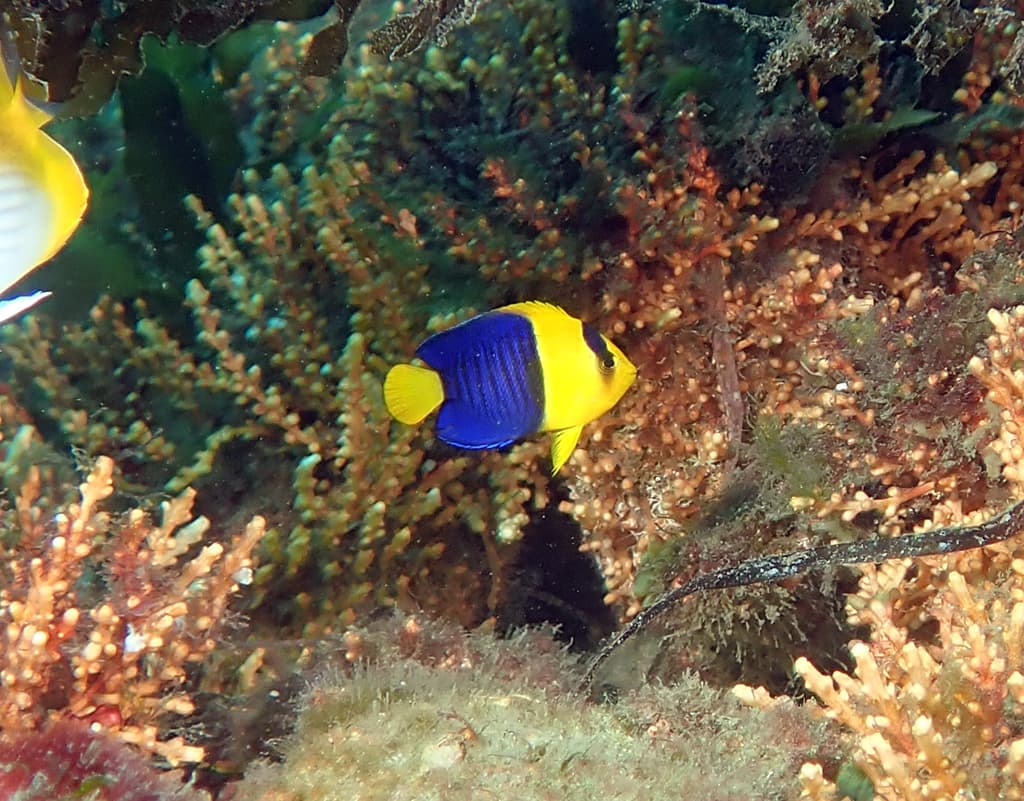
The Bicolor Angelfish is one of the most visually distinctive members of the Centropyge genus, featuring a bold and sharply defined two-tone color pattern. The anterior half of the body is a vibrant lemon yellow, while the posterior half, including the dorsal fin and tail, is a deep royal blue. A striking blue band runs across the forehead and through the eyes like a mask, adding dramatic contrast. This clean, high-contrast coloration makes the Bicolor Angelfish instantly recognizable and highly sought after.
Widely distributed throughout the Indo-Pacific, from the eastern coast of Africa to Samoa and from southern Japan to the Great Barrier Reef, Centropyge bicolor inhabits lagoon and outer reef slopes at moderate depths. It is typically found among rubble and coral formations, where it feeds on algae, tunicates, and small invertebrates. Like other dwarf angelfish, it is a protogynous hermaphrodite that lives in small harems, with the dominant female capable of transforming into a male.
The Bicolor Angelfish is considered an intermediate-level species in the aquarium hobby. While it is not the most difficult dwarf angelfish to keep, it can be sensitive to shipping stress and may initially refuse food. Specimens from Fiji and the Marshall Islands are generally considered the hardiest. Once acclimated, it is a durable and active aquarium inhabitant that adds bold color to any marine setup. It should be housed in an established aquarium with ample live rock for grazing. As with most dwarf angelfish, there is a moderate risk of coral nipping, particularly toward soft corals and LPS.
Feeding & Diet
Omnivore
Bicolor Angelfish are omnivores that require a varied diet including Spirulina-enriched flakes or pellets, frozen mysis shrimp, enriched brine shrimp, and high-quality angelfish preparations containing sponge matter. Supplement with nori seaweed and provide established live rock for natural algae grazing. Feed two to three times daily. Newly imported specimens may need live foods to begin feeding.
Compatibility
reef-cautiondwarf-angel-territorialcommunity-compatiblecoral-nipper-risk
The Bicolor Angelfish is territorial toward other dwarf angelfish and may be aggressive toward similarly colored or shaped fish. Only one Centropyge species should be kept per tank unless the system is very large (125+ gallons) with ample rockwork. It generally coexists well with clownfish, tangs, wrasses, gobies, and other community reef fish. Avoid housing with overly aggressive species.
Check CompatibilityBreeding
Very Difficult
Bicolor Angelfish are protogynous hermaphrodites that form harems in the wild. Spawning occurs at dusk, with the pair rising into the water column to release buoyant eggs. Captive breeding is extremely difficult due to the tiny pelagic larval stage and specialized feeding requirements. Virtually all specimens available in the trade are wild-caught.
Special Requirements
- Established aquarium with mature live rock essential
- May nip at soft corals, LPS, and clam mantles
- Sensitive to shipping stress - acclimate carefully
- Only one dwarf angelfish per tank unless system is very large
- Specimens from Fiji and Marshall Islands tend to be hardiest
- Provide multiple hiding spots and caves in rockwork
Water Parameters
Temperature72–82°F
Specific Gravity1.02–1.026 sg
pH8–8.4
Alkalinity8–12 dKH
Coloration
yellowblueblack
Tags
reef-cautiondwarf-angel-territorialcommunity-compatiblecoral-nipper-risk