BeginnerSemi-AggressiveReef Safe with CautionIUCN: Not Evaluated
Flameback Angelfish
Centropyge acanthops
Family: Pomacanthidae · Dwarf Angelfish
Also known as: African Flameback Angelfish, African Pygmy Angelfish, Orangeback Angelfish
(c) tony rebelo, some rights reserved (CC BY-NC)
Max Size
3"
Min Tank
30 gal
Lifespan
5-7 years
Origin
East Africa, Indian Ocean
Diet
Omnivore
Swims
Middle
Did You Know?
- The Flameback Angelfish is sometimes confused with the Brazilian Flameback (Centropyge aurantonotus), which looks nearly identical but is found in the Western Atlantic rather than the Indian Ocean
- Unlike many dwarf angelfish that are found at moderate to deep depths, the Flameback Angelfish is commonly encountered in relatively shallow waters along the East African coast
About
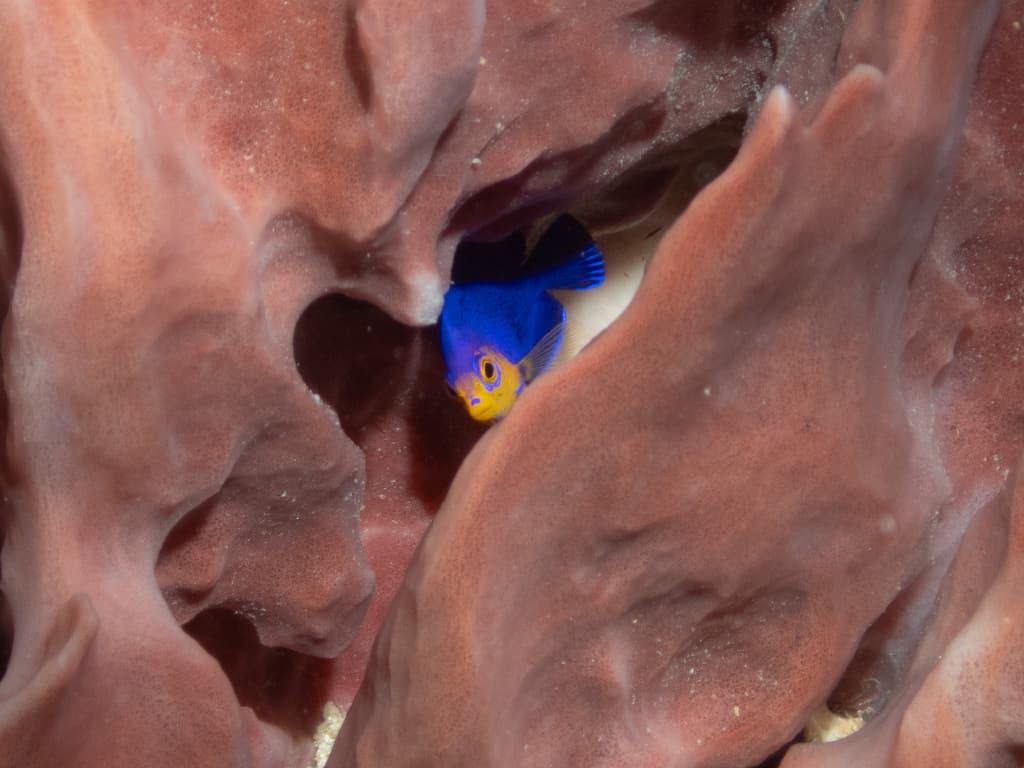
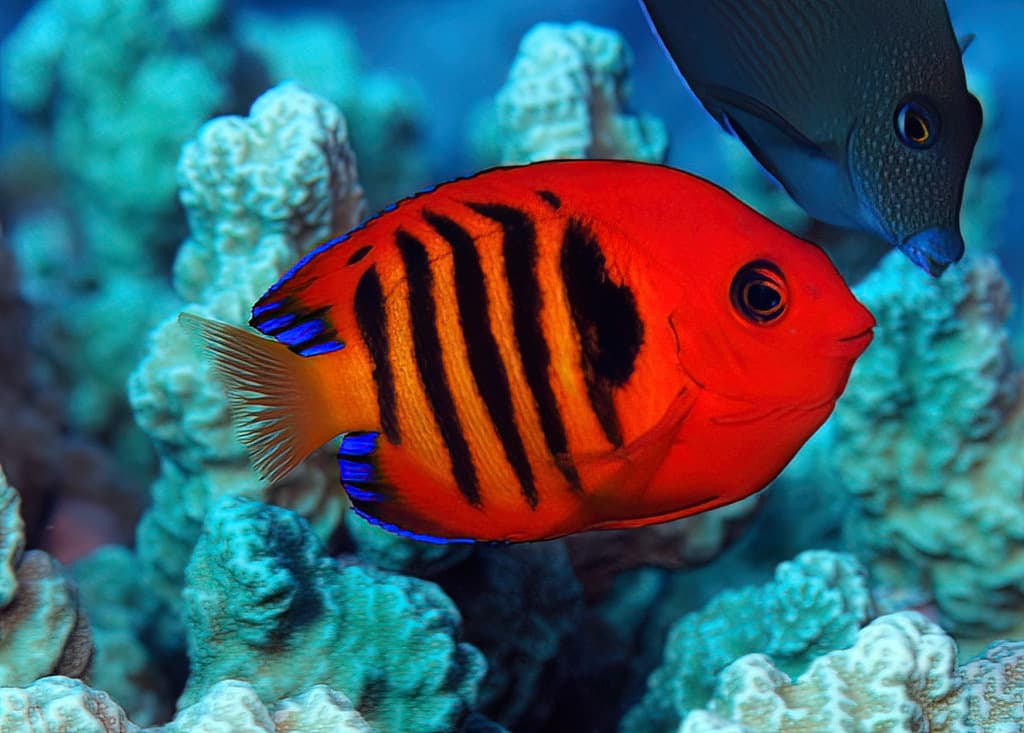
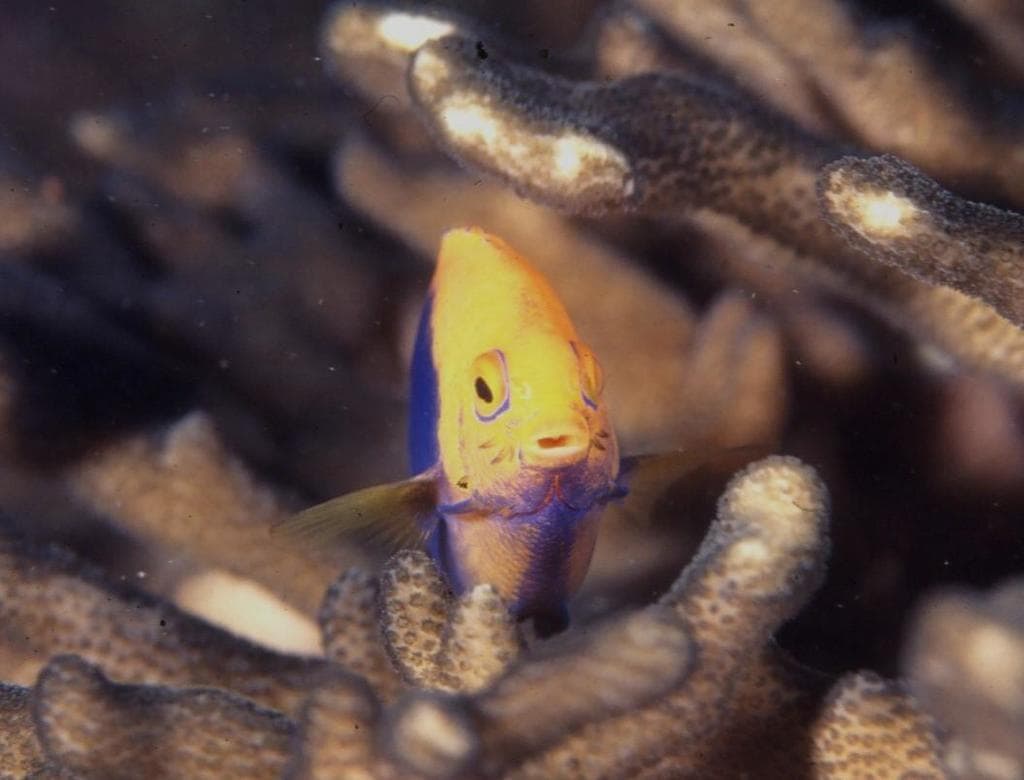
The Flameback Angelfish is a small and strikingly colored dwarf angelfish originating from the reefs of East Africa and the western Indian Ocean. Its body is predominantly a deep sapphire blue, highlighted by a brilliant orange-yellow dorsal stripe that runs from the head along the back to the base of the tail, giving the species its common name. The tail fin is typically yellow, creating a beautiful contrast against the blue body. Growing to just 3 inches, it is one of the most manageable and attractive dwarf angelfish available.
In the wild, Centropyge acanthops is found along the coastlines of East Africa, from Kenya and Tanzania southward to South Africa, as well as around Indian Ocean island groups including the Maldives, Mauritius, and Madagascar. It inhabits coral rubble and rocky reef areas at depths of 5 to 40 meters, often occurring in small loose groups. Like other members of its genus, the Flameback Angelfish is a protogynous hermaphrodite, living in harems where the dominant female transitions to male when needed.
The Flameback Angelfish is widely regarded as one of the hardiest and most beginner-friendly dwarf angelfish species. It acclimates readily to captive conditions, accepts a variety of prepared foods with minimal fuss, and is generally less prone to coral nipping than many of its Centropyge relatives. However, as with all dwarf angelfish, individual specimens may occasionally pick at LPS corals or zoanthids, so it is classified as reef-safe with caution. Its small size, bold coloration, and easy-going temperament make it an excellent choice for aquarists seeking their first dwarf angelfish.
Feeding & Diet
Omnivore
Flameback Angelfish are omnivores that graze on algae and small invertebrates in the wild. In the aquarium, feed a varied diet of Spirulina-enriched flakes and pellets, frozen mysis shrimp, enriched brine shrimp, and quality angelfish preparations. Nori seaweed and established live rock for natural grazing complete the dietary needs. Feed two to three times daily in small portions.
Compatibility
reef-cautiondwarf-angel-territorialcommunity-compatiblebeginner-friendly
The Flameback Angelfish is generally peaceful for a dwarf angelfish but can be territorial toward other Centropyge species and similarly shaped fish. Only one dwarf angelfish should be kept per tank unless the system is large (100+ gallons) with abundant rockwork. It coexists well with clownfish, tangs, wrasses, gobies, blennies, and other peaceful to semi-aggressive community fish.
Check CompatibilityBreeding
Very Difficult
Flameback Angelfish are protogynous hermaphrodites that form small harems in the wild. Spawning takes place at dusk, with the male and female rising into the water column to release pelagic eggs. Captive breeding is extremely challenging due to the minuscule pelagic larvae. No commercially significant captive breeding has been achieved for this species.
Special Requirements
- Established aquarium with mature live rock for grazing
- Provide multiple hiding spots and small crevices
- Less prone to coral nipping than many dwarf angelfish but still a risk
- Only one dwarf angelfish per tank unless system is very large
- One of the hardiest dwarf angelfish - excellent for beginners
Water Parameters
Temperature72–82°F
Specific Gravity1.02–1.026 sg
pH8–8.4
Alkalinity8–12 dKH
Coloration
blueorangeyellow
Tags
reef-cautiondwarf-angel-territorialcommunity-compatiblebeginner-friendly