BeginnerPeacefulReef Safe
Tailspot Blenny
Ecsenius stigmatura
Family: Blenniidae · Nano Fish
Also known as: Tail-Spot Combtooth Blenny
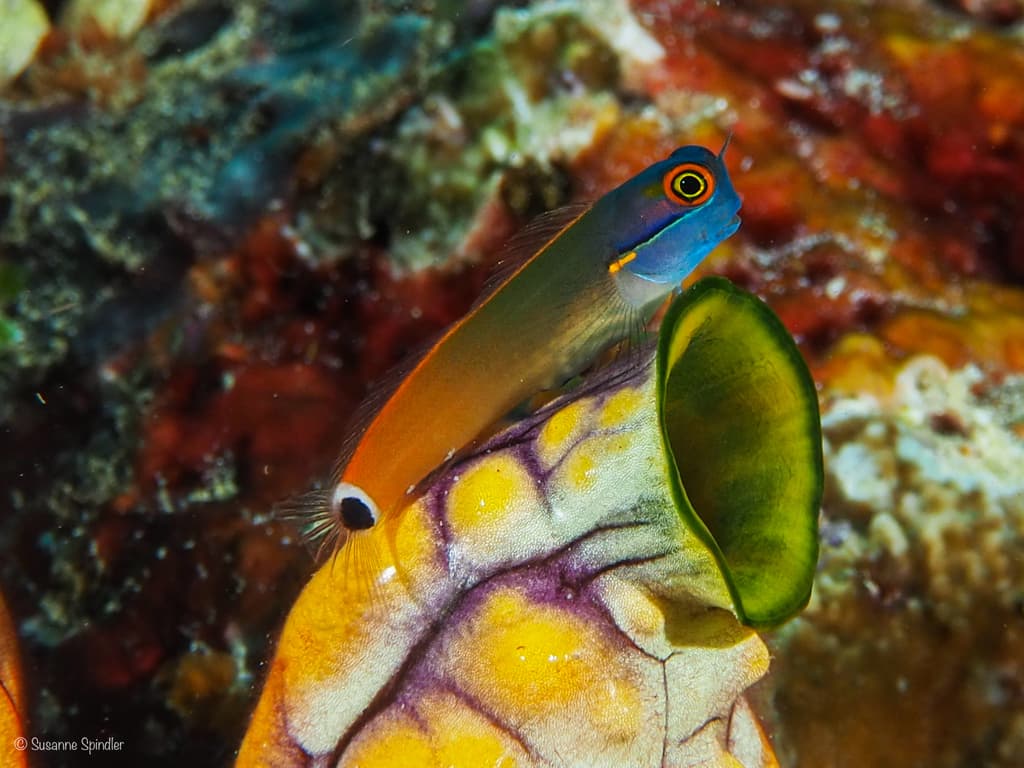
(c) Susanne Spindler, some rights reserved (CC BY-NC-ND)
Max Size
2.5"
Min Tank
10 gal
Lifespan
3-5 years
Origin
Western Pacific, Philippines
Diet
Herbivore
Swims
Bottom
About
The Tailspot Blenny is a delightful nano fish that has become increasingly popular for small reef aquariums. This petite species features a slender body with a gradient of golden-tan to brownish coloration, highlighted by thin orange and blue horizontal lines across the head and a signature dark spot at the base of the tail that gives the species its common name. Its expressive eyes and comical perching behavior give it a personality that far exceeds its diminutive size.
This species is an ideal inhabitant for nano reef aquariums as small as 10 gallons. It spends its time perching on rocks, coral heads, and equipment, surveying its territory with characteristic blenny curiosity. The Tailspot Blenny is primarily a herbivore that grazes on microalgae growing on rock surfaces, making it a useful and attractive addition to small reef systems where it provides gentle algae maintenance.
The Tailspot Blenny is hardy, peaceful, and reef-safe, making it one of the best choices for beginning nano reef keepers. It readily accepts prepared foods including marine pellets and flake food, though algae-based preparations should form a significant part of its diet. It can be kept singly in nano tanks or in small groups in larger aquariums, though males may squabble if space is limited.
Feeding & Diet
Herbivore
Tailspot Blennies are primarily herbivores that graze on microalgae in the wild. In captivity, provide algae-based pellets, spirulina flakes, marine algae sheets, and frozen preparations with vegetable matter. They will also accept frozen mysis shrimp and brine shrimp. Feed two to three times daily.
Compatibility
reef-safepeacefulnano-compatiblealgae-eaterbeginner-friendly
The Tailspot Blenny is peaceful and compatible with most nano reef tankmates including small gobies, clownfish, and other peaceful species. May show minor territorial behavior toward other blennies in small tanks. Completely reef-safe with all corals and invertebrates.
Check CompatibilityBreeding
Difficult
Tailspot Blennies can spawn in captivity. Males guard eggs deposited in small crevices. Larvae are planktonic and very small, requiring specialized foods like rotifers and copepod nauplii. Home breeding is possible but challenging.
Special Requirements
- Ideal for nano reef aquariums
- Provide rockwork for perching and algae grazing
- Algae-rich diet important for health
- Keep singly in nano tanks to avoid territorial disputes
Water Parameters
Temperature74–80°F
Specific Gravity1.02–1.026 sg
pH8.1–8.4
Alkalinity8–12 dKH
Coloration
tangoldorangebluebrown
Tags
reef-safepeacefulnano-compatiblealgae-eaterbeginner-friendly